Faro Portugal by Motorbike: Old Town and Ria Formosa
What to see in Faro Portugal: old town, Ria Formosa and Praia de Faro. How to ride from Lisbon, where to park and which motorbike to rent.
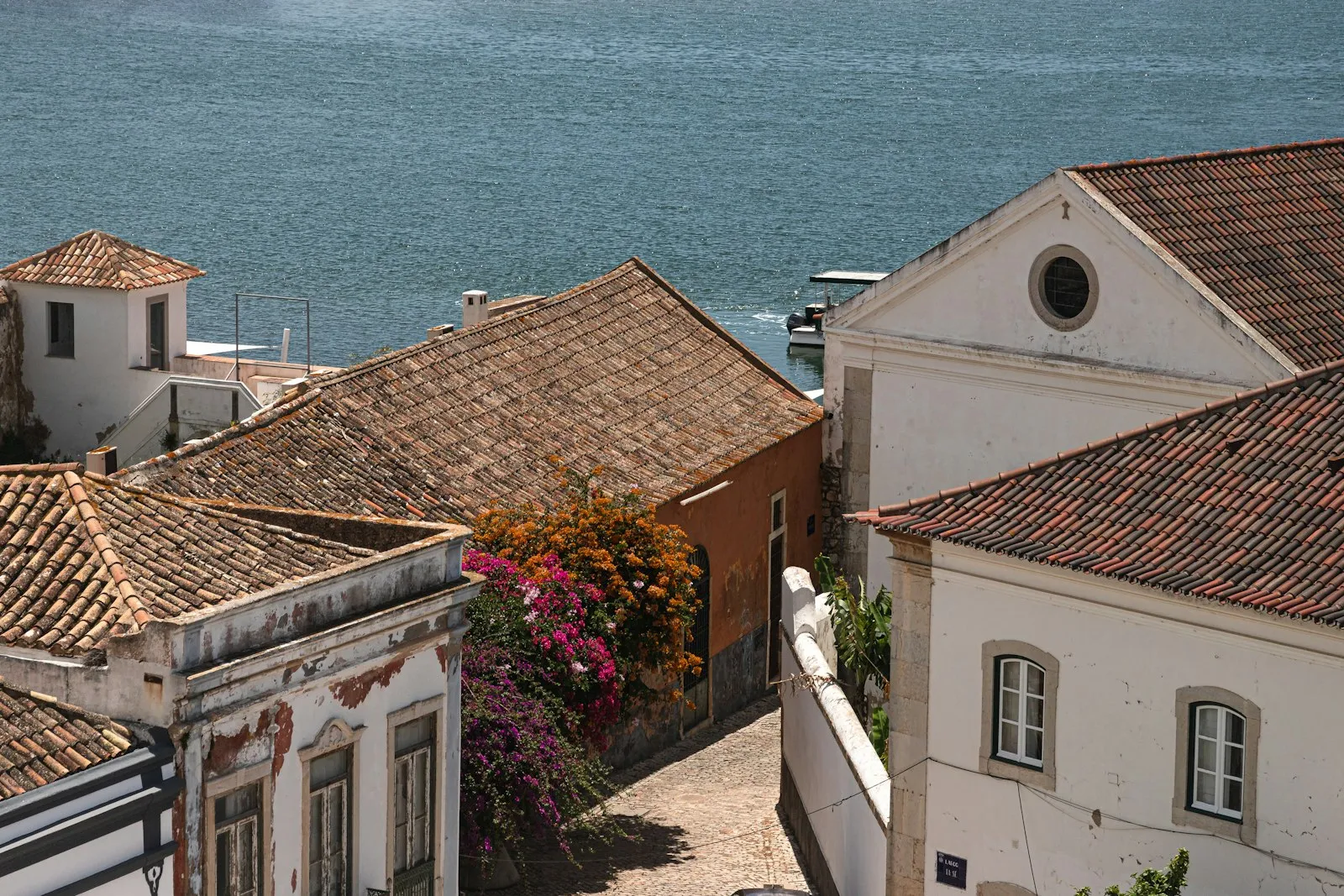
Anyone looking for what to see in Faro Portugal tends to find the same answer: it is the airport city, the place you pass through on the way somewhere else. That is a shame, because Faro is small, easy to walk, has an old town inside city walls and, a few minutes away, one of the most unusual landscapes in southern Portugal: the Ria Formosa. And one detail changes everything, the scale. Faro is 250 to 300 km from Lisbon, and by motorbike that road becomes part of the trip instead of lost time.
In short:
- Faro is 250 to 300 km from Lisbon: think 2 to 4 rental days, never a one-day trip.
- The old town is small and takes half a morning on foot; the Ria Formosa needs the rest of the day.
- The Ria Formosa Natural Park stretches along 60 km of coast and covers about 18,400 ha (ICNF).
- The rental includes 400 km per day, with a 2-day minimum in the Algarve.
- A trail or adventure bike, such as the Honda NC750X or the Transalp 750, handles the round trip well.
Why Faro is different from the rest of the Algarve
The Algarve in the brochures is one of golden cliffs and strolls between hotels. Faro is something else. It is a district capital, with a university, street shops and people who live there all year round. You can feel it in the rhythm: in the late afternoon, the café terrace in the garden by the marina fills up with locals, not passing tour groups.
For anyone travelling by motorbike, it is also the ideal base for two or three days. From here you can easily reach the Ria Formosa, Olhão and Tavira to the east and, to the west, Albufeira and the cliff coast. One city, several days, without packing your bags every morning.
How to get to Faro by motorbike from Lisbon
The shop is in Sobreda (Almada), on the south bank, which already spares you the crossing through Lisbon traffic: pick up the bike and you are on the A2 motorway within minutes. The A2 runs south to the Algarve and the A22 takes you from there to Faro. The total distance is around 280 km, about three hours of clear riding, plus the stops your body asks for.
There is a slower and much prettier alternative: leave the motorway in the Alentejo and follow the national roads, or go down the Atlantic coast. Here we are talking about Faro, and the essential point is this: if you are in a hurry, take the motorway; if you have time, take the road.
There is also a train from Lisbon to Faro, and the CP website shows current timetables and prices. But the train leaves you at the station, and that is where the trip ends: the Ria Formosa, the island beaches and the coastal villages are out of walking range. With your own bike, the day carries on after you arrive.
Which motorbike to choose for the trip
For 280 km of motorway and then short rides, a bike with some comfort makes a difference. The Honda NC750X and the Transalp 750 are among our most balanced options: upright position, reasonable wind protection, low fuel consumption. At November 2026 prices, the NC750X costs €100 per day and the Transalp 750 costs €110; both require an A licence. You can see these and the rest at faro portugal by motorbike: bikes for rent.
A 125 cc scooter can get you to the Algarve, but it is not the most relaxing choice for so many kilometres in a row. It pays off better in Lisbon. A maxi-scooter or a trail bike solves both parts of the trip.
Kilometres and days
Each rental day includes 400 km, and for the Algarve the minimum rental is 2 days. A round trip to Faro is about 560 km, plus local rides: with 3 days you get 1,200 km included, plenty of room. Each extra kilometre costs €0.49. Allow for the A2 and A22 tolls, which the customer pays during the rental; the Visit Algarve portal helps you plan the rest of your stay.
The old town, inside the walls
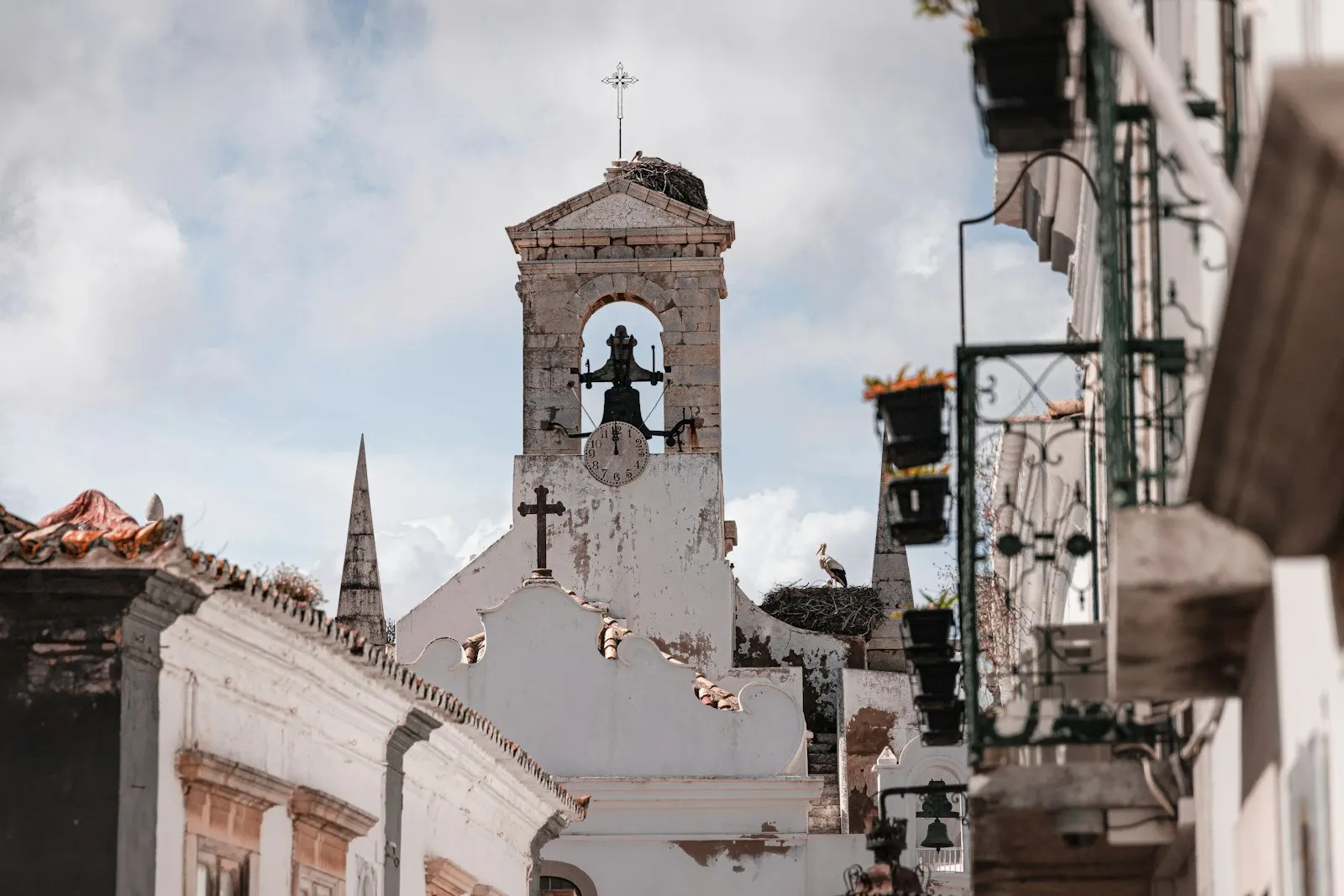
Faro's historic centre, the Cidade Velha, is small and enclosed by walls. You enter through a gate, the Arco da Vila, which opens onto cobbled streets where no big motorbike wants to go: leave the bike outside and do this on foot. It is the most practical advice in this article.
In the middle of the old town stands the Sé de Faro (cathedral), with its bell tower, and a walk around the square takes a few minutes. Nearby are the Museu Municipal, housed in a former convent, and the Igreja do Carmo, behind which is the Capela dos Ossos (Chapel of Bones), built in 1816 with the bones of monks. It is a short visit, a little gloomy and much talked about. Opening hours and prices change by season; check them before you go on the tourism page of Visit Portugal, which gathers the official information.
Where to park the motorbike
Do not try to ride into the old town: the streets are narrow, the surface is uneven stone and there are many people on foot. Leave the bike in a parking area outside the walls, by the marina or on the surrounding streets, and follow the local signs. Always lock your helmet and jacket to the handlebars or take them with you. If you are staying 3 days, choose accommodation with a garage or closed courtyard and ask for it when booking.
The Ria Formosa: the reason to stay one more day
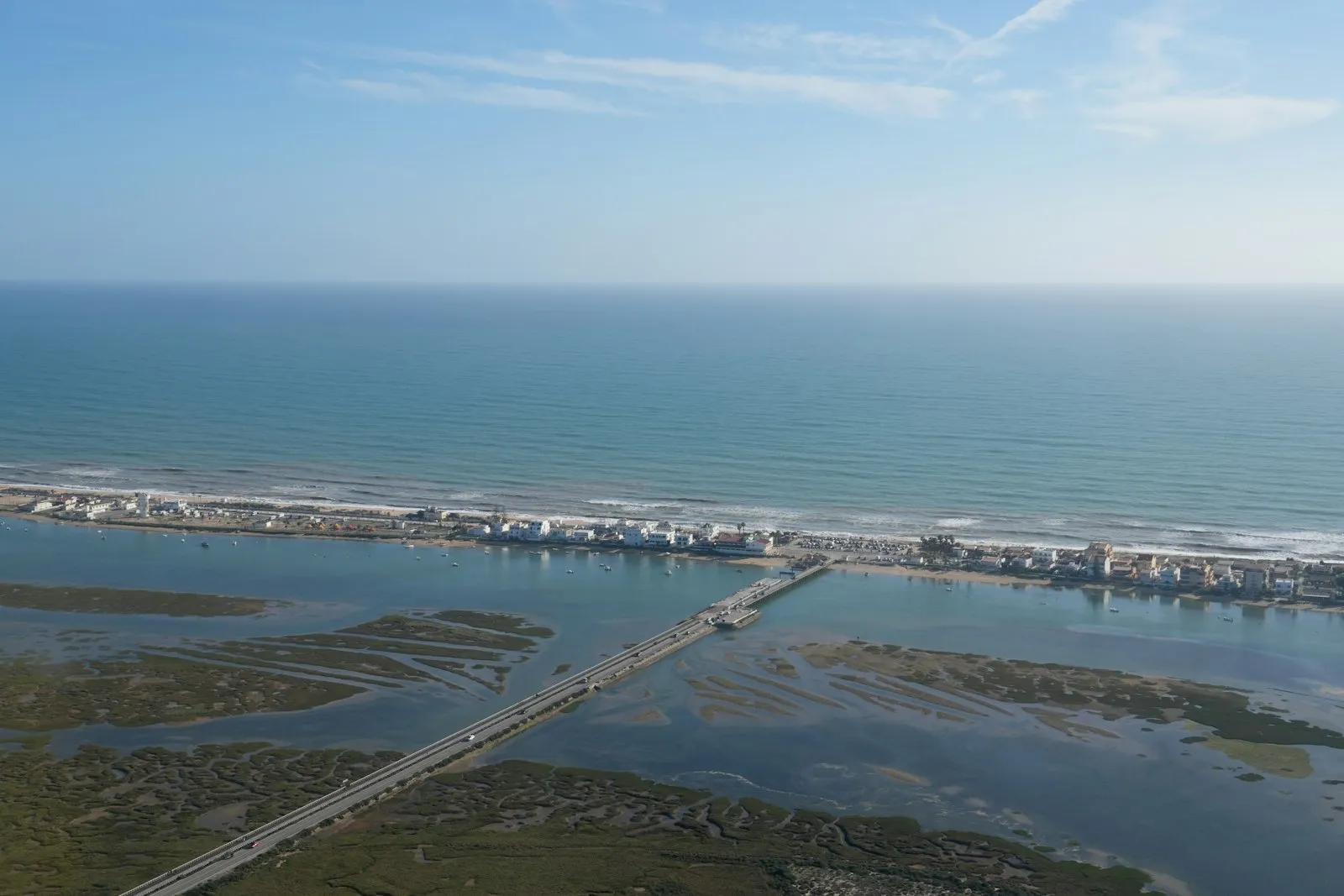
According to the ICNF, the Ria Formosa Natural Park extends along 60 km of the Algarve coast, from the Ancão Peninsula to Manta Rota, and covers about 18,400 ha across the municipalities of Loulé, Faro, Olhão, Tavira and Vila Real de Santo António. About 11,000 ha make up the lagoon system proper, a chain of sandy islands and peninsulas that protects a lagoon full of channels, salt marshes and salt pans.
What you see is easy to describe and hard to forget: low tide, shining mud, small boats stranded, waterbirds looking for food. The official park guide (ICNF) mentions flamingos, spoonbills, herons and waders at various times of the year, and the chameleon, a reptile that in Portugal exists only on the Algarve coast.
Praia de Faro and Ilha Deserta
Praia de Faro (Faro Beach) is on the Ancão Peninsula and is the closest to the city: you can ride there and be back by lunchtime. It is a beach with a long stretch of sand, the lagoon on one side and the sea on the other. Further on, Ilha da Barreta, also called Ilha Deserta, is where Cabo de Santa Maria lies, the southernmost point of mainland Portugal, according to the ICNF; the boat there leaves from Faro. Boat times vary with the season, so ask locally.
A day in Faro, step by step
- Arrive mid-morning and leave the bike outside the walls.
- Walk through the Arco da Vila, the Sé and the streets of the old town, about two hours.
- Lunch of local fish or seafood at one of the terraces by the marina.
- Afternoon at Praia de Faro, or on the boat to the islands.
- Back to your accommodation in the late afternoon, with the low light over the Ria.
In summer the islands are crowded; in spring and autumn everything is calmer, and that is the time we recommend if you can choose.
Beyond the city: Olhão and the Ria trails
The natural park does not end at Faro's limits. The ICNF guide says that, on the EN 125, heading from Faro to Vila Real de Santo António, you should turn left about a kilometre after Olhão to reach the Marim Environmental Education Centre. For a motorbike it is a short detour, on a good road, and it gives access to bird observatories and a sample of almost all the park's habitats.
Closer to Faro, the Percursos do Ludo are two linear routes, which cross, for walking or mountain biking. The ICNF gives them between 5 and 7 km (round trip) on the Caminho do Ludo and 5 km on the Salinas do Ludo, easy difficulty, waymarked and with a bird observatory. Leave the bike parked at the start, bring water and closed shoes: the trail is dirt and salt marsh. On hot days, choose the morning.
What to bring on the motorbike
For a trip of two to four days, one side case and a backpack are enough. Bring a light layer for the mornings, sun cream, sunglasses and a reusable water bottle. The full-face helmet, gloves, jacket and phone holder can be rented as extras, and the ventilated summer jacket makes a difference on the A2 on hot days. On the road, stop every hour and a half: it is the rule that spares your body most on long trips.
Best time to go
The Algarve has a mild climate almost all year, but summer is hot and the road is busier; spring and early autumn balance sun and calm well. Before leaving, check the forecast on the IPMA website, which has the official weather warning for the Faro district. On the road, the coastal wind is what bothers motorbike riders most, and the still-cool mornings call for an extra layer under your jacket.
If your idea is to ride small roads without hurry, combine Faro with Olhão and Tavira on the same day: Olhão is right next to Faro and Tavira a little over half an hour away, and the landscape of salt pans and channels continues from one to the other.
Faro within a bigger trip
If you rent for a week, you can make Faro the final destination and return by another route: out along the A2, back along the Costa Vicentina, or the other way round. Ideas for linking stages are in our article on how to rent a motorbike to travel in Portugal. For a long weekend, the ideal bike is a trail, which handles both the perfect tarmac of the motorway and the rural roads of the interior.
If you want something more comfortable for two, the Transalp 750 has a relaxed riding position and luggage space; see the specifications and the licence required at faro portugal with the Transalp 750. Price and booking are on the bike's page.
Frequently asked questions
How many days do I need to see Faro by motorbike?
The city can be seen in a morning and the Ria Formosa in an afternoon, but as Faro is 250 to 300 km from Lisbon, the rental should be 2 to 4 days. The minimum for the Algarve is 2 days.
How many kilometres are included in the rental?
400 km per day. Extra kilometres cost €0.49 each.
Can I take a 125 cc scooter to Faro?
You can, with an A1 licence, or with a B licence as long as you are at least 25 years old. For long distances, a trail bike or maxi-scooter is more comfortable.
Can I ride into Faro's old town?
Better not: the streets inside the walls are narrow, with uneven cobbles and full of pedestrians. Park outside the Arco da Vila, in a permitted spot, and explore the Cidade Velha on foot; it takes a little over two hours, with stops.
Where do I pick up the motorbike?
At the shop at Estrada Nacional 10-1 n.º 189, Sobreda (Almada), from 09:00 to 17:00. There is also delivery at Lisbon airport: at November 2026 prices, €50 for pick-up and €60 for return.
One final tip that few guides give: if your trip coincides with low tide at the end of the day, go back to the edge of the Ria at that hour. The colour of the mud in the low light is the best ending to a day in Faro.
Ready to ride in Lisbon?
Book your motorcycle or scooter in a few minutes, with delivery across Lisbon.
View the fleetSources
- 1CP websitehttps://www.cp.pt
- 2Visit Algarve portalhttps://www.visitalgarve.pt
- 3Visit Portugalhttps://www.visitportugal.com/pt-pt/content/faro
- 4official park guide (ICNF)https://www.icnf.pt/api/file/doc/f61c223d0d89e467
- 5IPMA websitehttps://www.ipma.pt
Motorcycle and scooter rental in Lisbon, Portugal.
All articles by the teamYou may also like
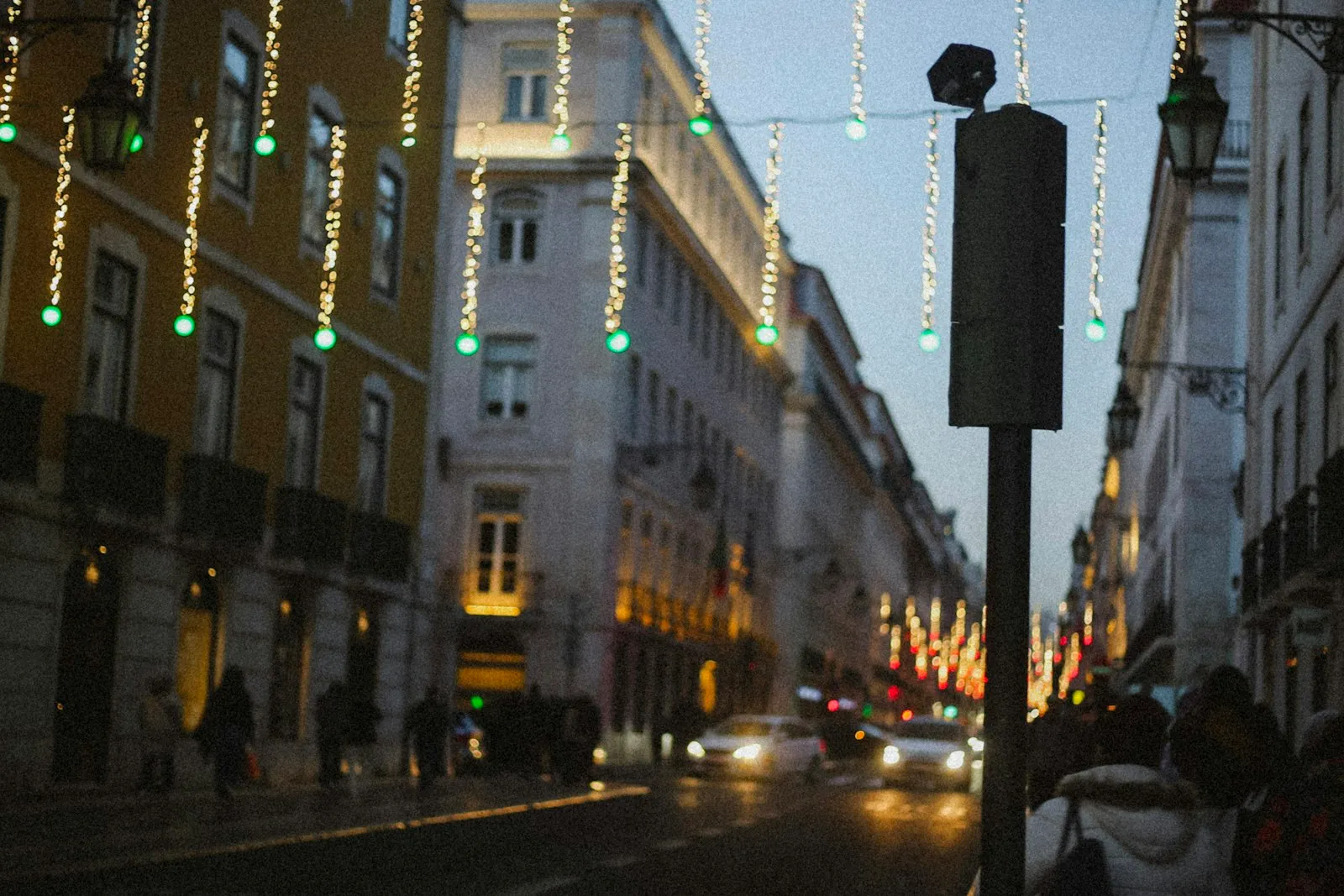
Christmas in Lisbon 2026: Lights and How to See Them by Scooter
Christmas in Lisbon 2026: light dates, where to park and what's open on 24 and 25 December. How to see it all by scooter from Almada.
Read more →
Portugal in Winter by Motorbike: Where the Weather Is Mild
Portugal in winter: IPMA temperatures and rain in Lisbon, Faro and Guarda, where to ride a motorbike in mild weather and which routes to avoid.
Read more →
Algarve Weather in December by Motorbike: Roads and Gear
Algarve weather in December: IPMA temperatures and rainfall, what's open, empty roads and how to ride a motorbike in winter.
Read more →