Algarve Weather in December by Motorbike: Roads and Gear
Algarve weather in December: IPMA temperatures and rainfall, what's open, empty roads and how to ride a motorbike in winter.
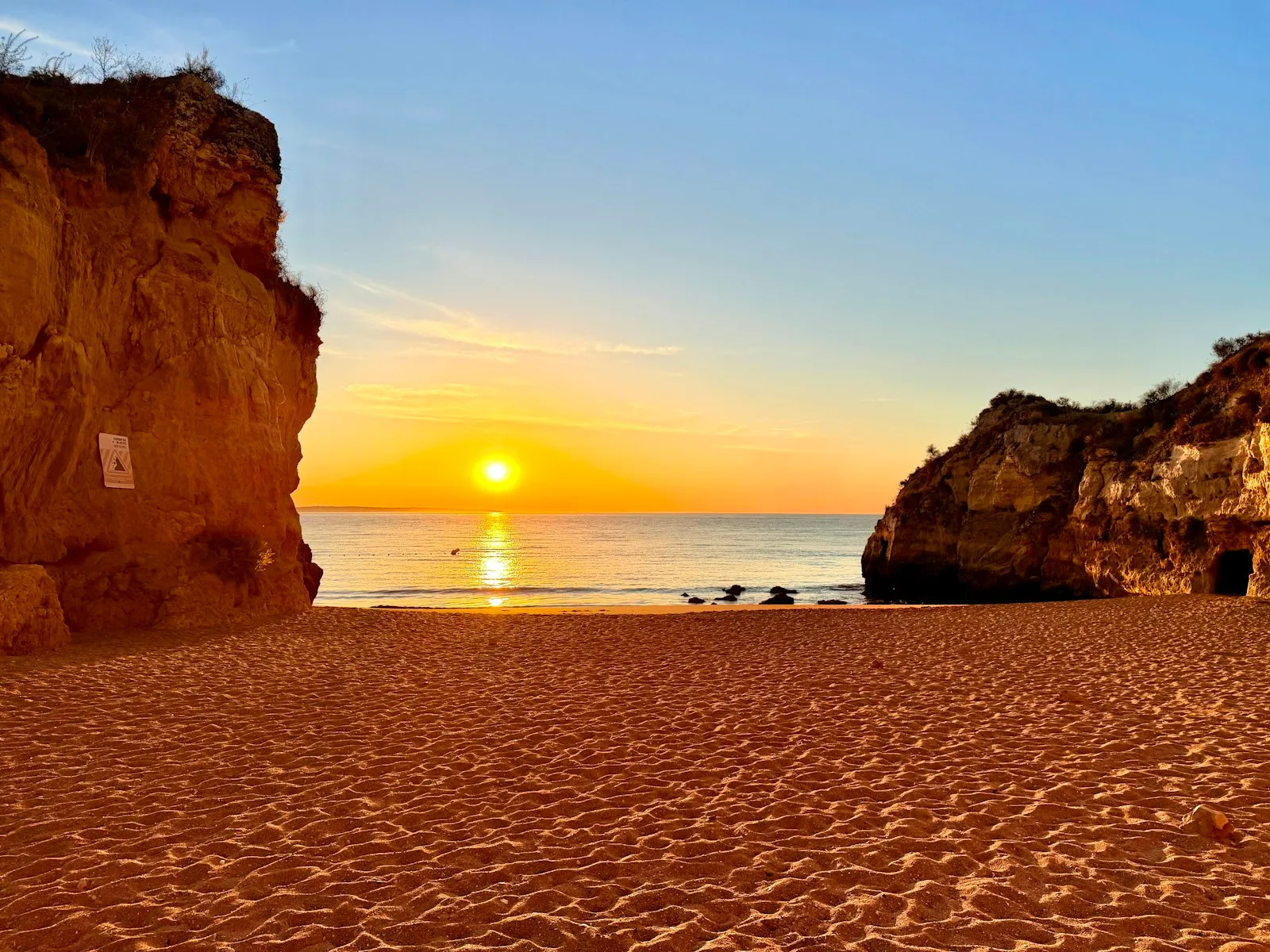
Think of the Algarve and you think of August: queues of cars on the road to the beach, full car parks, sunshades packed side by side on the sand. In December the picture is different. The same cliffs, the same whitewashed villages and the same bends by the sea, but with the road almost to yourself. If you are searching for Algarve weather in December to find out what to expect and whether it makes sense to go by motorbike, the short answer is yes, with the right expectations and the right clothing. This guide uses the official IPMA (Portuguese Institute for Sea and Atmosphere) averages and explains what changes when you ride in the south at the start of winter.
In short:
- Faro in December: average high of 17.1 °C and average low of 9.7 °C (1991-2020 normals, IPMA).
- It is the rainiest month of the year in Faro: 90.0 mm, with about 7 days of rain of 1 mm or more.
- The Algarve is about 250 to 300 km from our shop in Sobreda: rentals of 2 to 4 days, minimum 2 days.
- 400 km per day are included, each extra kilometre costs €0.49.
- Book online with 30% of the price; 100% refund on cancellation more than 7 working days in advance.
The real Algarve weather in December
Let's get to the numbers, because this is where most guides stay vague. The IPMA publishes climate normals, that is, 30-year averages, and the Faro airport station is the reference for the eastern Algarve (Sotavento). For 1991-2020, December has an average maximum temperature of 17.1 °C, an average minimum of 9.7 °C and a mean temperature of 13.4 °C.
For riders, the average maximum is the number that matters most, because it is what you feel during the day, between ten in the morning and five in the afternoon. Eighteen degrees sounds pleasant, but at 80 or 90 km/h the wind chill drops considerably, which is why the gear section below is not optional. On the coldest nights of the month, the absolute minimum recorded in that period was 1.2 °C, so frost on the coast is rare but not impossible. At the other extreme, the warmest December day in that series reached 23.1 °C, in 2018. On average, no December day goes above 25 °C.
Rain: the month's weak point
December is the rainiest month of the year in Faro, with 90.0 mm of average rainfall, against 75.5 mm in November, 49.3 mm in January and just 0.9 mm in July. On average, it rains 7.0 days a month with 1 mm or more and 3.2 days with 10 mm or more. In other words: most days it does not rain, and when it does it tends to come in episodes, not a whole week of grey.
The practical consequence is simple. On a 3-day rental, the odds are that two of the days will be dry. The opposite can happen, so it is worth checking the IPMA weather warning the day before and having a plan B for the rainy day, which is easy in the Algarve: museums, markets, a long break with a coffee and a pastry in Tavira or Loulé. Keep in mind that a cancellation is only refunded at 100% more than 7 working days in advance, before there is a reliable forecast for your dates.
What is open and why the roads are empty
The winter Algarve is not a closed Algarve, but it is a different one. The big resorts and many proper beach restaurants hibernate between November and February. The towns, on the other hand, work all year round: Faro, Lagos, Tavira, Portimão and Loulé have local shops, municipal markets, cafés and restaurants open, because they live off the people who live there. Opening hours for museums, castles and monuments change with the season, so always check each one's website or the region's official tourism portal before planning your day.
What disappears is the traffic. On the EN125 and on the secondary roads along the coast, in December you will meet more tractors and delivery lorries than tour coaches. For riders, this changes everything: you can choose your speed, stop at a viewpoint without hunting for a space, park the bike at the café door and set off again without waiting in a line of cars. The same route that in August takes three hours of stress can be done in December with time to look at the sea.
There are also the almost deserted beaches. Even at 17 °C nobody goes swimming, but walking on the wet sand, watching the emerald-coloured water on low-sun days and having lunch on a terrace sheltered from the wind is something that does not exist in July. The official Visit Portugal portal gathers the region's points of interest and is a good starting point for choosing stops.
From Sobreda to the Algarve
Our shop is at Estrada Nacional 10-1, no. 189, in Sobreda (Almada), on the south bank of the Tagus (Margem Sul), and it is open from 09:00 to 17:00. It is a useful starting point for the Algarve, because the road south begins practically at the door, without crossing central Lisbon. From the shop to the Algarve it is about 250 to 300 km, depending on the destination, which means a morning on the road and arriving for lunch.
That is why we treat the Algarve as a rental of two to four days, never as a day trip. The minimum is 2 days and each day includes 400 km, more than enough to go there and back with a good detour along the coast. If the plan is to go out by motorway, spend a full day along the coast and come back by an A-road (estrada nacional), the included kilometres are comfortably enough. Each extra kilometre costs €0.49.
For the first few hours, the southbound motorway is the quick option: in winter, with the light fading early, it is no time to try out secondary roads blind. If you want a calmer experience you can follow the Alentejo coast, as we describe in our guide to the Costa Vicentina by motorbike, but plan your stops with daylight in mind.
Delivery to the airport or hotel
If you arrive by air, delivery and collection at Lisbon airport are paid services: pick-up at €50 and return at €60 (prices as of November 2026). At your hotel or home, within 10 km, delivery and collection cost €40 each. You can choose when you book online. Pick-up at the shop has no extra cost.
Which bike to choose for the winter Algarve
The Algarve does not call for a racing bike. It calls for comfort, wind protection and a riding position that does not tire you after 250 km. Within our fleet, there are three different answers depending on the type of trip.
A trail or touring bike is the most logical choice for winter: tall fairing, windscreen, upright position and weight that gives stability in crosswinds. It is the kind of bike that stays comfortable when the temperature only reaches 12 °C in the morning. You can see all the options on the page of bikes for Algarve weather in December and compare the licence required and minimum age on each listing.
An urban touring bike, such as the Honda NC750X for Algarve weather in December, works well for those who want a relaxed pace, with storage space and moderate fuel consumption. The licence and age requirements are on the bike's page, under "Requirements", and you should read them before booking.
125 scooters are great for towns like Faro, Lagos or Tavira, where everything is done at low speed, but for a 250 km crossing and A-roads on a cold, damp day they are not the most comfortable choice. A 125 makes sense if your plan is to spend several days in a single town; for getting around, choose a larger bike.
Riding in the Algarve in December: what changes
Layered clothing
The golden rule of winter is layers. A thermal base layer close to the body, a mid layer (thin fleece or vest) and, on top, the motorcycle jacket or suit with protection. For the face and neck, a tube scarf or neck warmer stops the wind getting in at the collar. Gloves should be winter ones, preferably waterproof, because hands are the first thing to get cold and the one that most affects your control of the bike. If your suit is not waterproof, bring a thin waterproof that fits under the seat.
The visor deserves attention: on damp days, it fogs up. An anti-fog film or a Pinlock visor solves the problem, and should be sorted before you set off, not at the roadside. High, waterproof footwear completes the kit.
Wet roads
Algarve asphalt, after weeks without rain, becomes slippery in the first minutes of a shower, because the water mixes with accumulated oil and dust. At that point, slow down, avoid painted lines and manhole covers, and increase your following distance. Braking should be progressive and corners wider than usual. On days of heavy rain, take a break and wait: showers in the Algarve usually pass in half an hour.
Another point is the wind. In open coastal areas, particularly near Sagres and Cabo de São Vicente, the west or northwest wind can be strong and gusty. Hold the handlebars firmly and pay more attention when passing lorries. The IPMA issues warnings by district for wind, rainfall and rough seas, and it is worth reading the IPMA warnings map the day before each leg.
Short days
In December, the sun sets early. This affects more than it seems: a 200 km leg with stops that in July is done with light until nine in the evening requires you in December to arrive at your destination by late afternoon. Plan to reach your accommodation before dark and avoid riding at night on unlit secondary roads, with animals or sand on the carriageway. Leave early in the morning, start the day with the longest road and keep the final part for the short ride.
A 3-day itinerary for the winter Algarve
Instead of a fixed programme, here is a plan that adapts to the weather. Leave the shop in the morning, ride south with one stop for coffee and reach the Algarve in the early afternoon. The first day is for arriving and settling in: a short ride along the coast, an early dinner.
The second day is the big one. If the weather is dry, follow the coast between Lagos and Sagres, with stops at viewpoints. If it is cloudy, stay around Tavira and Faro, which has more shelter and more towns to visit. The third day is reserved for the return, with time for a stop on the Alentejo coast and to reach Sobreda before 17:00, the shop's closing time.
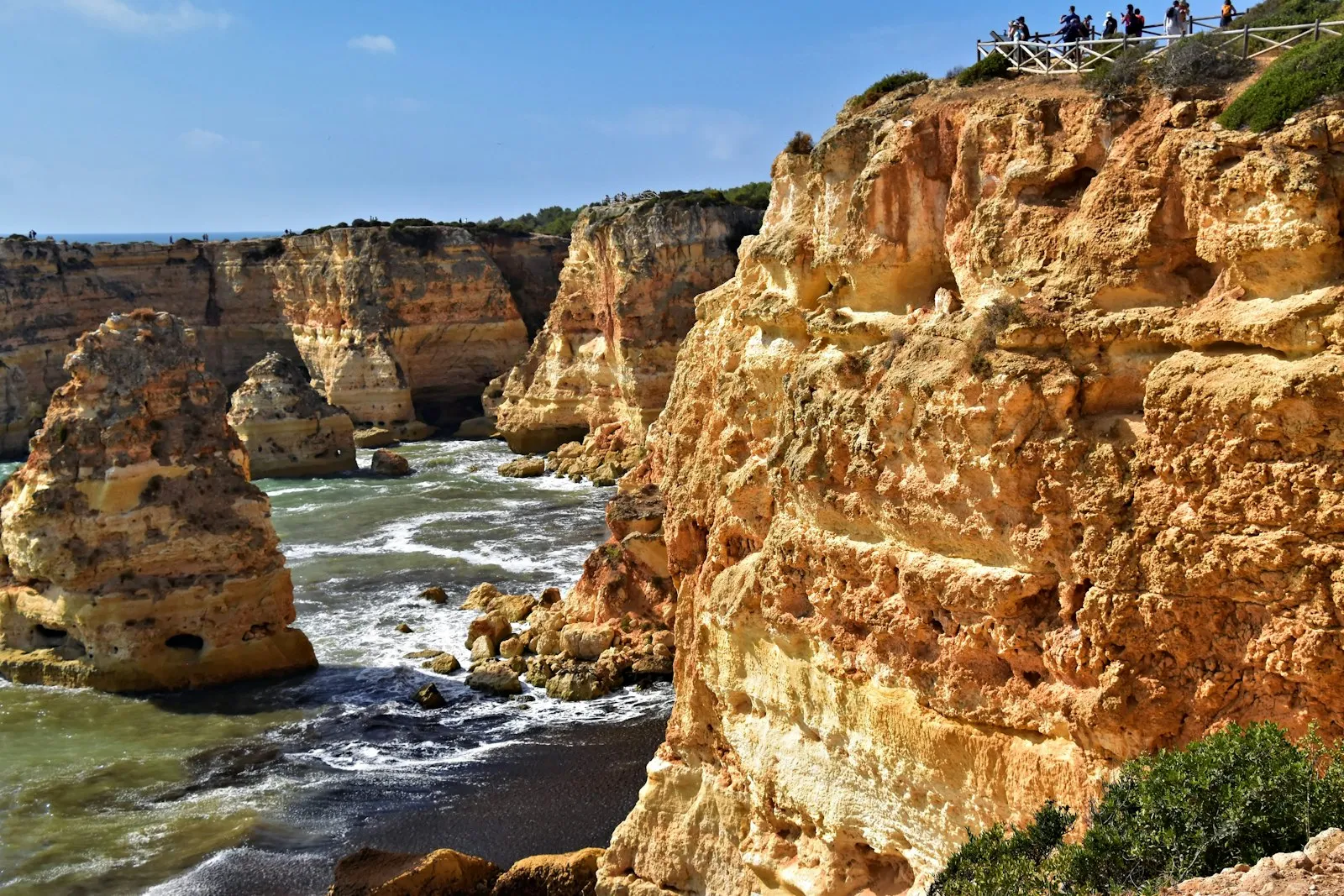
If you only have two days, concentrate on one area. The coast between Lagos and Sagres has rhythm and views, the stretch from Faro to Tavira has towns to explore and flat roads. Choosing a single area gives you more time on the road and less on the motorway.
Booking, paying and the deposit
Booking is online and you pay 30% of the price at that point. The deposit is a pre-authorisation on your credit or debit card, released on the day the bike is returned, and the bank usually takes 7 to 15 working days to show the release on your statement. The insurance includes third-party liability and roadside assistance, and does not cover every risk, so read the terms before picking up the bike.
In Christmas and New Year weeks, the earlier you book, the more models you have to choose from. For events and seasonal programming, see the Visit Algarve portal.
Algarve in December: worth the risk?
If you want beaches and swimming, no: the sea is cold and the wind makes the sand uncomfortable from mid-afternoon. If you want roads, low light, peace and the feeling of having the region to yourself, yes, and with room to spare. The IPMA numbers say it plainly: a high of 17 °C, seven days of rain a month and winters that do not reach zero on the coast. That is a mild winter compared with the north of the country and with much of Europe, especially along the coastal strip.
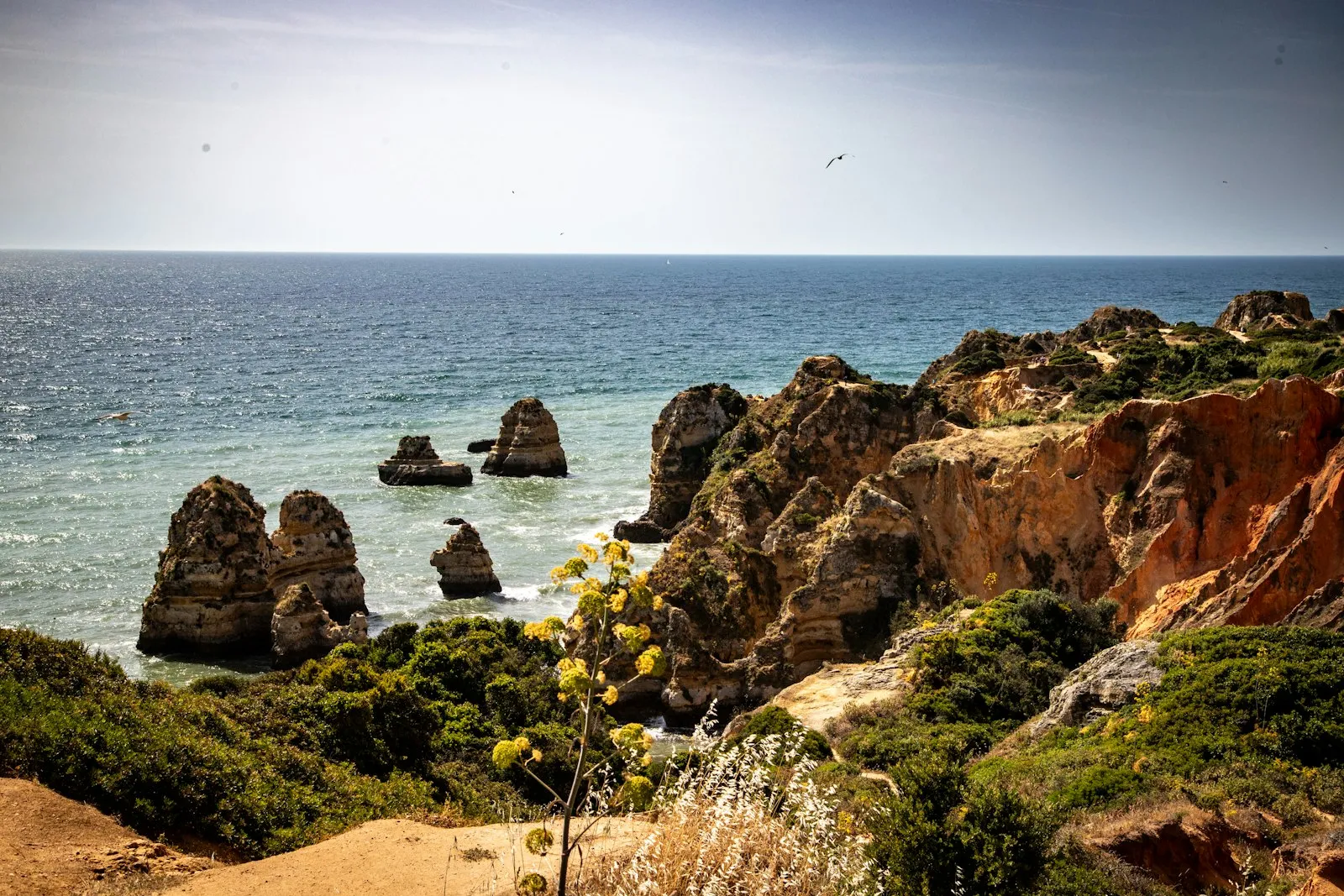
The best advice we can give is this: choose the right bike, dress well, check the forecast and go. The best photographs of Algarve cliffs are not taken in August, they are taken on a December late afternoon, with golden light hitting the rock from the side.
Frequently asked questions
What is the temperature in the Algarve in December?
According to the IPMA 1991-2020 climate normals for Faro, the average maximum temperature is 17.1 °C, the average minimum is 9.7 °C and the daily mean is 13.4 °C. The absolute minimum in that period was 1.2 °C and the maximum 23.1 °C.
Does it rain a lot in the Algarve in December?
It is the rainiest month of the year in Faro: 90.0 mm on average, with about 7 days of rain of 1 mm or more and 3.2 days with 10 mm or more. Most days it does not rain, but it is wise to have waterproof clothing.
Can I rent a motorbike for the Algarve in December?
Yes. The Algarve is about 250 to 300 km from our shop in Sobreda, so we treat it as a rental of 2 to 4 days, with a minimum of 2 days and 400 km per day included. Booking is online with 30% of the price.
Which bike is best for winter in the Algarve?
A touring or trail bike, with wind protection and a comfortable riding position, is the most logical choice. 125 scooters work well in towns, but are less comfortable on long, cold journeys.
Is the deposit released as soon as I return the bike?
The deposit is a pre-authorisation on the card, released on the day of return. The bank usually takes 7 to 15 working days to show it as released on the statement, so do not use a card whose limit is only just enough for the trip.
Ready to ride in Lisbon?
Book your motorcycle or scooter in a few minutes, with delivery across Lisbon.
View the fleetSources
- 1IPMA publishes climate normalshttps://www.ipma.pt/pt/oclima/normais.clima/1991-2020/
- 2official Visit Portugal portalhttps://www.visitportugal.com/pt-pt/destinos/algarve
- 3IPMA warnings maphttps://www.ipma.pt/pt/otempo/prev.avisos/
- 4Visit Algarve portalhttps://www.visitalgarve.pt/pt
Motorcycle and scooter rental in Lisbon, Portugal.
All articles by the teamYou may also like
Via Verde Portugal: Paying Motorcycle Tolls and Classes
How to pay tolls in Portugal by motorcycle with Via Verde Portugal: Class 1, electronic tolls and solutions for visitors with a foreign vehicle.
Read more →
Lisbon to Seville by Motorbike: 3 Routes and a 4-Day Itinerary
Lisbon to Seville on a rental motorbike: three routes through the Alentejo, distances, stops, a 4-day itinerary and the Spain border rule.
Read more →
Elvas Portugal by Motorcycle: UNESCO Walls and 2 Days
Elvas Portugal by motorcycle from Lisbon: 200 km, World Heritage walls, Forte da Graça, Amoreira Aqueduct, best bike and a 2-day itinerary.
Read more →