
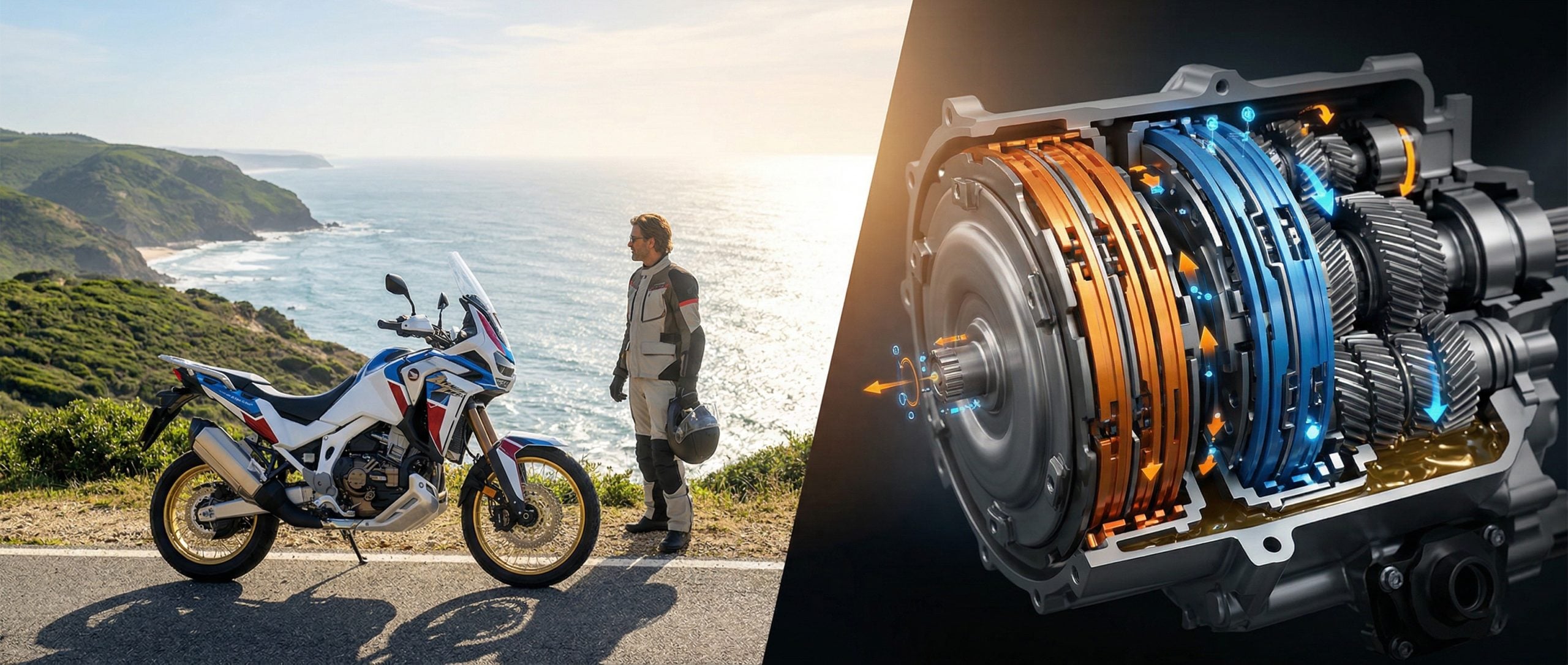
Since the absolute dawn of motorized locomotion, mechanical engineers have intensely struggled with one fundamental, highly complex dilemma: exactly how to successfully and efficiently transfer the rotational power generated by an internal combustion engine down to the driven wheels continuously, efficiently, and completely without any disruptive dynamic interruptions. For well over an entire century of automotive history, passionate drivers were fiercely forced to choose constantly between two highly distinct, uncompromising compromises. They could actively choose the traditional manual gearbox, which proudly offered a direct, pure, and highly fuel-efficient mechanical connection, but which exhaustingly demanded constant physical effort and inherently resulted in an unavoidable, frustrating loss of forward momentum (and vital torque) during every single gear shift. Alternatively, they could lazily choose the traditional automatic transmission equipped with a fluid torque converter, which generously provided exceptional, plush luxury comfort in dense urban traffic, but terribly suffered from massive parasitic energy losses, sluggish throttle responses, and a frustrating, rubbery sensation of total disconnection between the accelerator pedal and the road.
The endless quest for the true “Holy Grail” of automotive transmissions—a perfect system that magically combined the lightning-fast speed and the unshakeable mechanical efficiency of a manual gearbox with the absolute, relaxing convenience of an automatic transmission—seemed like a completely unattainable engineering utopia. It was precisely in this context that Dual-Clutch Transmission technology, universally and globally known by its English acronym DCT, successfully transitioned directly from highly secretive, multi-million dollar racing tracks straight onto the public roads, radically and permanently altering the standard automotive engineering paradigm and, even more profoundly, shaking the global world of motorcycles to its core. In this deeply exhaustive, highly technical guide, we will surgically dissect the complex internal anatomy of a DCT gearbox, deeply explore its fascinating historical evolution in detail, carefully analyze its monumental impact on touring, and loudly share the exact reason why this highly advanced technology is currently the undisputed reigning queen of the modern market.
1. The Historical Genesis: From the Tracks of Le Mans to the Open Road
Despite the fact that the massive, explosive commercial success of the DCT essentially occurred early in the 21st century, the pure intellectual, foundational concept standing proudly behind this mechanical marvel is surprisingly, incredibly ancient. The original, brilliant idea was officially patented by the visionary French military engineer Adolphe Kégresse in the turbulent year of 1939. Kégresse, already globally famous for ingeniously inventing the heavy track systems utilized for military vehicles, conceptualized a brilliant dual-clutch system specifically designed for the legendary Citroën Traction Avant. Unfortunately, primarily due to the tragic, devastating outbreak of the Second World War and the total lack of advanced electronic computing control units available during that era, his absolute genius mechanical prototype tragically never successfully reached mass production lines.
The complex technology essentially remained completely dormant, gathering dust deep within engineering archives for nearly forty long years, until it was finally resurrected by the elite motorsport division of Porsche during the wild, speed-crazed 1980s. Porsche desperately, urgently needed a transmission that actively allowed their monstrous Group C racing prototypes, the legendary 956 and 962 cars, to maintain massive, constant turbo boost pressure strictly during the heavy gear changes on the incredibly long, terrifying straights of the 24 Hours of Le Mans circuit. Thus, the mighty PDK (Porsche Doppelkupplungsgetriebe) was officially born. The heavy gearbox actively proved to be devastatingly, brutally fast, aggressively reducing lap times drastically, but it was far too incredibly violent, jerky, and lacked the vital refinement strictly necessary for comfortable civilian passenger vehicles.
It was only later in 2003 that the massive German automotive giant Volkswagen, working in direct, deep collaboration with BorgWarner (one of the absolute largest global companies specializing in the development of complex mechanical transmission components), successfully managed to finally tame the brutal beast. They proudly launched the absolute first mass-produced DCT gearbox in the world, commercially baptized as the DSG (Direct-Shift Gearbox), heavily installed in the iconic Volkswagen Golf R32. From that singular, highly pivotal moment forward, traditional manual gearboxes essentially began their slow, agonizing, but absolutely inexorable descent into complete obsolescence within the high-performance car market, as widely and consistently documented by the rigorous statistical reports provided by JATO Dynamics.
2. Anatomy of a Marvel: Exactly How the DCT Works
To genuinely, truly comprehend the brilliant genius hidden within the DCT, it is absolutely vital to completely abandon the classic mental image of a traditional manual gearbox. A DCT is, within its physical and architectural essence, literally two completely independent manual gearboxes flawlessly merged and perfectly packaged inside a single, massive aluminum casing, highly operated by an incredibly sophisticated, ultra-fast electro-hydraulic “brain” commonly known as the mechatronic unit.
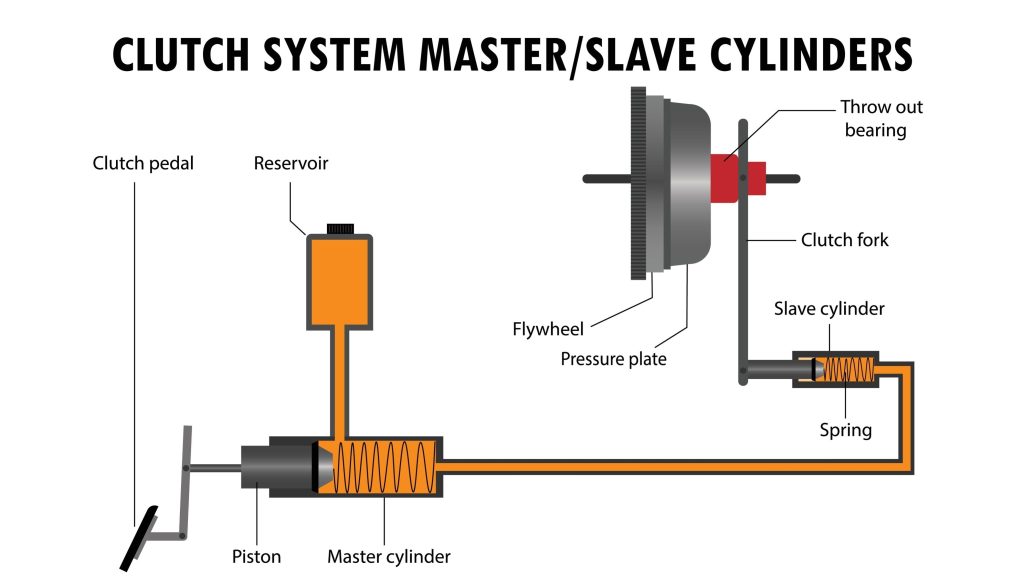
The absolute central mechanical magic resides deeply in the specific arrangement of the transmission shafts. Unlike a normal manual gearbox that possesses a single, solid primary input shaft, the complex DCT utilizes two concentric input shafts (specifically, one hollow outer shaft physically spinning directly around a solid inner shaft).
- The outer shaft is physically linked directly to the very first clutch pack and exclusively, strictly controls the odd-numbered gears (1st, 3rd, 5th, and 7th).
- The inner shaft is securely linked to the second clutch pack and exclusively, strictly controls the even-numbered gears (2nd, 4th, 6th) and the reverse gear.
When the aggressive driver accelerates fiercely forward in 3rd gear, the first primary clutch is completely closed, forcefully transmitting the engine’s explosive power directly to the driven wheels. However, the transmission’s high-speed computer, intelligently utilizing complex predictive algorithms heavily based upon the exact position of the accelerator pedal and the rising vehicle speed, has already successfully “guessed” that 4th gear will inevitably be the very next one needed. Therefore, the gearbox physically, mechanically pre-selects 4th gear directly on the secondary shaft, perfectly keeping the second clutch completely, fully open and waiting.
In the exact, precise millisecond that the driver aggressively pulls the steering wheel paddle, or the computer’s intelligent logic decides to make the shift in fully automatic mode, the perfect, flawless mechanical ballet actively occurs: the first clutch rapidly opens at the exact, identical instant that the second clutch aggressively closes. This highly synchronized, overlapping clutch engagement results directly in a gear change that frequently takes a mere 8 milliseconds (vastly faster than the physical blinking of a human eye). There is absolutely zero interruption in the flow of kinetic power; the brutal acceleration is a relentless, continuous, and incredibly smooth wave. The driver physically feels only an uninterrupted, massive shove of torque, magically transforming the act of driving into an experience that perfectly combines the violent dynamics of a racing car with the quiet smoothness of a luxury limousine.
3. The Electronic Brain: Mechatronics and Predictive Algorithms
The true soul of the DCT transmission absolutely does not reside merely in its steel cogs, but rather within its advanced electronic brain, officially known as the mechatronic module. This highly complex unit flawlessly combines highly sophisticated electronic sensors with microscopically precise hydraulic fluid valves. The module continuously, actively evaluates dozens of dynamic parameters in real-time: the internal oil temperature, the steep inclination of the road, the exact physical pressure applied to the brake pedal, the specific turning angle of the steering wheel, and the raw lateral acceleration rate.
If the driver is currently cruising in a highly relaxed manner, the brilliant mechatronics carefully adjust the hydraulic valves to engage the heavy clutches slowly and gently, focusing entirely on extreme comfort and absolute silence. However, if the aggressive “Sport” or “Track” mode is deliberately activated, the internal hydraulic pressure is instantly ramped up to its absolute maximum limit. The lightning-fast gear shifts become almost violently abrupt, heavily optimized for extreme performance lap times rather than soft comfort. Furthermore, the intelligent predictive software is so incredibly advanced that, if the driver is heavily accelerating at full throttle (strongly predicting a rapid upshift), but suddenly, violently slams on the heavy brake pedal, the DCT instantly Abandons the pre-selected higher gear and mechanically pre-selects a much lower gear instead to safely guarantee massive engine-braking effect, clearly demonstrating an incredible capability of dynamic adaptation that absolutely no human being could ever hope to physically replicate manually.
4. The Two-Wheeled Revolution: The Honda Paradigm
If the successful introduction of DCT in passenger cars was effectively a natural and logical evolution, its direct application in the highly traditional, deeply skeptical, and purely mechanical world of motorcycles was an act of extreme and incredible corporate courage. For long decades, the classic manual gearbox, with its left-foot pedal and left-hand clutch, was stubbornly considered the sacred and inviolable essence of pure motorcycling.
In the year 2010, Honda Global completely shocked the entire global two-wheeled industry by proudly presenting the massive VFR1200F, the first production motorcycle in human history heavily equipped with a dual-clutch transmission. Purists initially and loudly ridiculed the brilliant idea, unfairly dubbing it a “motorcycle for lazy people.” However, Honda stubbornly maintained its unwavering and profound engineering vision, intensely refining the software code, aggressively miniaturizing the heavy hydraulic components, and successfully adapting the complex technology to vastly different platforms.
Today, the inclusion of DCT in motorcycles is a colossal and massive commercial success. Iconic and legendary machines like the brutal Honda CRF1100L Africa Twin, the ultra-luxurious GL1800 Gold Wing, and the incredibly practical Honda NC750X proudly offer the DCT option. In the specific case of the NC750X, the DCT has elevated the concept of versatility and urban comfort to a new level. Being a bike brilliantly designed for daily mobility and relaxed touring—famous for its practical and innovative front storage compartment where the fuel tank would normally be—the integration of this automatic transmission allows for absolutely effortless riding in heavy stop-and-go traffic, while simultaneously and intelligently optimizing fuel consumption. Highly tellingly, in many major European markets, the DCT version successfully sells in significantly higher numbers than the traditional manual version. On a heavy motorcycle, the absolute absence of power interruption through the gearbox invisibly offers an incredible and massive dynamic advantage. In tight, slow mountain corners or on highly technical dirt trails (off-road), where accidentally stalling the engine or incorrectly using a manual clutch can severely destabilize the chassis and instantly cause a painful fall, the brilliant DCT actively provides perfect and uninterrupted traction, successfully freeing up the rider’s brain capacity to focus entirely on the cornering trajectory, smooth braking, and vital body balance.
Today, the inclusion of DCT on motorcycles is a massive, colossal commercial success. Legendary, iconic machines such as the brutal Honda CRF1100L Africa Twin, the ultra-luxurious GL1800 Gold Wing, and the incredibly practical NC750X proudly offer the DCT option, and, highly revealingly, across many major European markets, the DCT version successfully sells in significantly higher numbers than the traditional manual version. On a heavy motorcycle, the absolute absence of power interruption through the gearbox seamlessly offers an incredible, massive dynamic advantage. In tight, slow mountain switchbacks or on highly technical, loose dirt trails (off-road), where accidentally stalling the engine or incorrectly using a manual clutch can severely destabilize the chassis and instantly cause a painful crash, the brilliant DCT actively provides perfect, uninterrupted traction, successfully freeing up the motorcyclist’s brain bandwidth to focus entirely on the cornering trajectory, smooth braking, and vital body balance.
5. The Economic Impact on the Touring and Rental Sector
Advanced DCT technology has profoundly altered not only precisely how we drive but also the entire foundational economy of motorized tourism. When meticulously planning expansive, breathtaking tourist routes across fantastic landscapes, thousands of eager travelers heavily rely on mobility services, and it is exactly here that the huge demand for motorcycle rental has undergone a massive, profound transformation.
For a visiting motorcyclist arriving fresh in a foreign, unknown country, actively dealing with unfamiliar, confusing traffic rules, different road signs, and highly complex GPS navigation maps already represents a massive, exhausting cognitive load. Foolishly adding the physical fatigue of constantly operating a heavy manual clutch and a clunky gearbox for eight grueling hours a day in stop-and-go city traffic or on steep, terrifying mountain ascents can easily transform a dream holiday ride into a miserable, exhausting physical ordeal.
This is exactly the primary reason why highly premium agencies offering motorcycle rental actively prefer and intensely promote motorcycle models heavily equipped with Honda’s DCT gearbox. The initial learning curve is merely a swift five minutes. The rider simply, happily presses the “Drive” button, smoothly rolls the throttle grip, and deeply enjoys the pure essence of the open road, the fresh Atlantic breeze, and the magnificent landscapes completely without the terrifying ghost of accidentally stalling the heavy engine at a dangerous, busy intersection. From a strict commercial standpoint, for the actual rental company itself, the heavy-duty DCT actively represents a highly lucrative insurance policy against inexperienced, clumsy clients who might otherwise completely burn out or physically destroy a traditional manual clutch pack on the very first day of their expensive trip due to massive misuse, effectively saving the agency thousands of hard-earned euros in heavy corrective maintenance.
6. Dry vs. Wet Clutches
Deep within the expansive DCT universe itself, there firmly exists a highly crucial engineering divide: Dry systems and Wet systems. Dry DCT transmissions were heavily and widely utilized in the very early first generations and specifically in lower-horsepower vehicles to strictly maximize ultimate fuel efficiency, as they completely avoided the heavy internal fluid friction drag of oil. However, in dense, slow traffic, the raw friction heating was extremely severe, frequently causing terrible, premature wear.
Today, advanced “Wet Clutch” systems are undeniably the absolute golden standard. The heavy clutch packs are deeply submerged in a continuous, flowing bath of highly specialized, high-tech transmission fluid that physically, actively cools the scorching friction plates. This brilliant engineering strictly allows manufacturers to confidently couple the DCT to massive engines that violently generate titanic quantities of torque (such as highly modern turbo-diesel engines or massive twin-turbo V8 blocks) completely without the slightest, tiniest risk of catastrophic overheating. This massive thermal evolution was the absolute, vital key to the current, unshakeable reliability of the technology.
7. DCT vs. Other Automatic Transmissions (CVT and Torque Converter)
For the highly astute, intelligent consumer, it is absolutely fundamental to deeply distinguish advanced DCT technology from the myriad of other “automatic” gearboxes readily available on the current market. Absolutely not all absences of a clutch pedal physically mean the exact same thing deep under the engine hood. The strict, complex engineering guidelines established by the Society of Automotive Engineers (SAE) help to accurately categorize these colossal, fundamental mechanical differences.
- DCT vs. Torque Converter (Traditional Automatic): The traditional torque converter actively utilizes a dense fluid coupling dynamically instead of solid, physical mechanical clutch plates. While they are undeniably, unquestionably smoother at very slow, parking-lot maneuvering speeds and excellent for heavily towing massive loads in heavy SUVs, converter boxes heavily suffer from massive parasitic energy losses inherent in fluid dynamics. The aggressive driver heavily steps on the gas pedal, and the heavy car frustratingly seems to “think” for a lazy split second before eventually moving forward. The DCT, on the other hand, perfectly offers a highly rigid, engaged mechanical link (solid metal on metal) exactly identical to a pure manual gearbox. There is absolutely no “slip” or frustrating “lag”; the brutal acceleration is immediate, and the sharp throttle response is crystal clear.
- DCT vs. CVT (Continuously Variable Transmission): CVT boxes absolutely do not possess real, physical, toothed gears. They utilize a highly complex system of expandable conical pulleys and a heavy steel pushbelt to continuously provide an infinite number of varying transmission ratios. While CVTs are truly extraordinary for keeping the buzzing engine strictly within its peak efficiency band for extreme, frugal fuel savings, they frequently, annoyingly generate the dreaded “rubber band effect” or “scooter effect,” where the engine aggressively revs up to its noisy limit and simply stays there screaming unpleasantly while the heavy vehicle slowly, gradually gathers speed. The DCT completely eliminates this constant, droning noise, actively offering clear, sharp, defined steps directly through the gear progression, beautifully restoring the aggressive sports passion and acoustic joy of driving that the boring CVT completely eradicates.
8. The Future and the Ongoing DCT Legacy
While the massive, silent electric revolution actively advances inexorably across the global automotive landscape, the brilliant DCT is absolutely not dead; it is actively, rapidly evolving. Brand new, highly advanced plug-in hybrids (PHEV) from premium, elite brands are seamlessly integrating incredibly powerful electric motors directly inside the massive aluminum casing of the DCT transmission itself. This not only flawlessly fills the tiny, microscopic dead time of torque during the lightning-fast gear shifts but also successfully allows the massive, heavy cars to drive purely, silently on electricity deep within dense cities. Within the passionate world of massive grand touring motorcycling, the heavy-duty DCT gearbox still currently possesses absolutely no true rival, proudly representing the absolute supreme culmination of pure, relaxing convenience flawlessly united with mechanical dominance.
A great way to see the DCT transmission in real-world action is the Honda X-ADV 750, one of the most popular models in our motorcycle rental fleet in Portugal. This adventure-scooter perfectly combines urban versatility with road and light off-road capability, thanks precisely to the DCT gearbox that eliminates any clutch and shifting effort.
Read the full review: Honda X-ADV 750 Review