Honda XADV 750 Review
Thinking of choosing a rent honda xadv 750 in Portugal? Read our expert mechanic’s review on DCT performance, luggage capacity, exact MPG, and real-world handling.
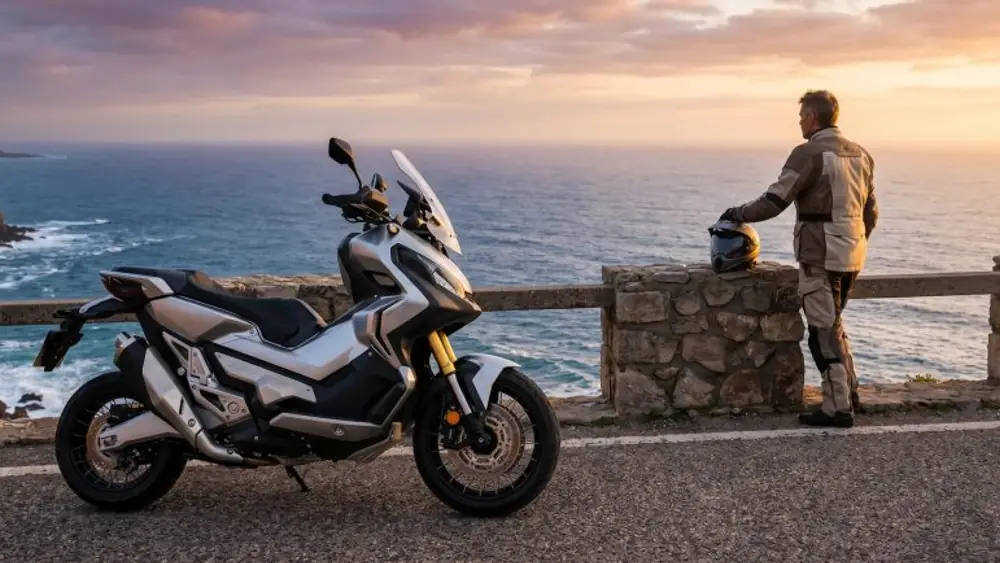
The global motorcycle industry collectively smirked when Honda unveiled the X-ADV concept at the Milan EICMA show back in 2016. The idea of crossbreeding a utilitarian urban maxi-scooter with a rugged adventure motorcycle seemed like the fever dream of a bored engineer desperately trying to invent a sub-segment that absolutely nobody asked for. Eight years later, the laughing has ceased entirely. The Honda X-ADV 750 did not just successfully carve out a niche; it ruthlessly obliterated the traditional boundaries of two-wheeled architectural design. As a fleet manager and test rider with over a decade and a half of experience actively destroying tire rubber across the harsh, unpredictable Iberian asphalt, I state this without a single shred of reservation: this is the most pragmatically lethal vehicle you can possibly choose to tackle the brutal, highly varied geography of Portugal.
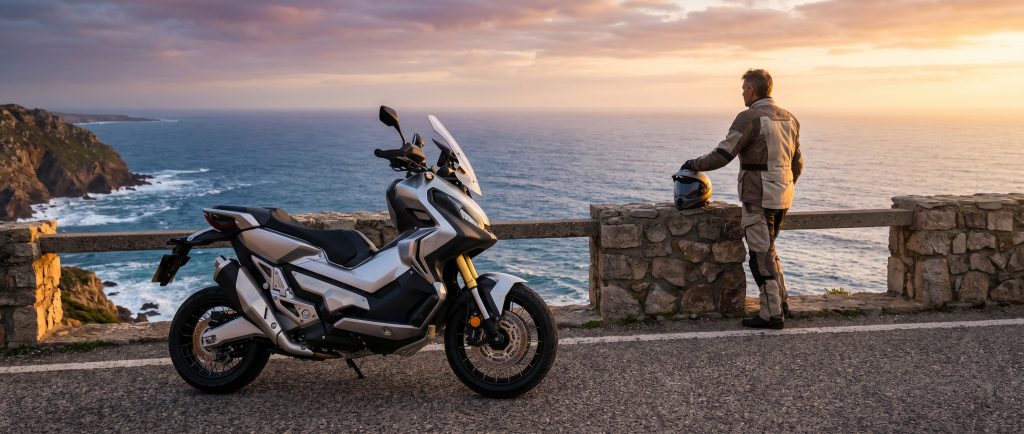
When a client browses the RENT.MOTO.pt platform, chronic indecision is the standard behavior. Tourists arrive wanting the aerodynamic weather protection of a touring scooter for the high-speed winds of the A1 motorway, the rapid low-speed agility of a naked bike to survive the murderous, congested traffic of the VCI in Porto, and the long suspension travel of a pure adventure bike to confidently explore the unpaved, gravel-strewn fire roads cutting through the Costa Vicentina. The Honda X-ADV delivers exactly that precise combination. Make no mistake. This is not a glorified, dressed-up scooter. It is a highly capable motorcycle frame in which, by pure ergonomic coincidence, you sit with your feet positioned forward.
Below, I am going to completely tear down the mechanics, the integrated electronics, and the harsh logistical realities of traveling cross-country with this specific machine. Zero marketing fluff. Just raw engineering and hard road facts.
The Powertrain Architecture: 745cc of Utilitarian Focus
The mechanical heart of the Honda X-ADV is the thoroughly battle-tested 745cc liquid-cooled, 8-valve parallel-twin block. It produces a relatively modest 43.1 kW (roughly 58 horsepower) at a low 6,750 rpm, paired with a massive, tractor-like torque output of 69 Nm arriving at a mere 4,750 rpm.
Forget peak horsepower figures. Top-end horsepower is an irrelevant vanity metric for a rental touring motorcycle. What dictates survival and comfort on a long trip with heavy panniers is the immediate availability of bottom-end torque. Honda engineers designed this motor with a deliberately long stroke (77 x 80mm bore and stroke). The crankshaft is phased at 270 degrees, creating an uneven firing order. The resulting mechanical pulse perfectly emulates the traction characteristics of a traditional V-twin engine, guaranteeing astonishing mechanical grip on low-traction surfaces like wet cobblestones or loose dirt. Furthermore, twin balance shafts actively cancel out primary vibrations, meaning your hands will not go numb after four hours in the saddle.
For a rider looking to rent Honda X-ADV 750, the initial psychological shock is the extremely low rev ceiling. This engine cuts ignition early. It absolutely despises being revved to the redline. It prefers to roll obnoxiously on the thick crest of its torque curve. If you are climbing a steep, winding 12% gradient in the Serra da Estrela mountains, fully loaded with a pillion passenger and heavy luggage, the motor never bogs down or complains. It pulls relentlessly like a diesel tugboat.
From a fleet management perspective, the reliability of this SOHC block is strictly ballistic. In our daily rental operations, these engine blocks easily surpass the 100,000 km mark without requiring anything more invasive than punctual valve clearance checks and strict, routine synthetic oil changes. The internal tolerances are heavily over-engineered.
Mechanical Sorcery: The Dual Clutch Transmission (DCT) Reality
The single highest psychological barrier for veteran manual motorcyclists who search to rent Honda X-ADV is the glaring absence of a clutch lever and a foot shifter. Learn more about how the Honda DCT transmission works. It is absolutely imperative to clear up a persistent industry myth: Honda’s DCT is not a belt-driven Continuously Variable Transmission (CVT) like the elastic, droning rubber band you find on a Yamaha TMAX. The DCT is a real, physical, mechanical gearbox packed with hardened steel gears. It utilizes two entirely independent clutch packs—one dedicated exclusively to odd gears (1st, 3rd, 5th) and the outer pack dedicated to even gears (2nd, 4th, 6th). These clutches are actuated by a highly complex electro-hydraulic circuit that pre-selects the next gear before you even realize you need it.
The 2024 system features four pre-defined mapping modes accessed via the Ride-by-Wire throttle, alongside a fully customizable User mode.
- Standard Mode: Strictly focused on extreme fuel economy. The gearbox short-shifts frantically, often clunking into 6th gear at a painfully slow 65 km/h. It is highly exasperating on tight, twisty canyon roads, but it is utterly brilliant for crawling across the congested deck of the 25 de Abril bridge in slow-moving traffic, keeping the engine in a hushed, lethargic state.
- Sport Modes (1, 2, and 3): This is where the ECU mapping truly wakes up. Sport 1 holds the gears slightly longer. Sport 3 is violently aggressive. It downshifts hard under heavy braking, matching the revs perfectly and offering a level of mechanical engine braking that no CVT on the market can possibly replicate. During a steep descent through the terrifyingly sharp hairpin corners of the Douro Valley, Sport 3 will forcefully hold 3rd gear, allowing the rider to completely ignore the brake levers and focus exclusively on corner trajectory.
- Gravel Mode: Specifically designed for off-road traction. It aggressively reduces the intervention of the Honda Selectable Torque Control (HSTC) and purposely softens the hydraulic clutch engagement to prevent sudden spikes in torque from breaking rear-wheel traction over loose shale and wet rocks.
If the algorithm fails to do exactly what you want, the heavy tactile “+” and “-” trigger paddles on the left switchgear allow you to manually override the computer at any given millisecond. For a seasoned tourist accustomed to shifting a heavy BMW GS, the first twenty minutes on the X-ADV are awkward. Your left hand instinctively grabs at thin air. Your left foot stomps uselessly on the floorboard. However, after spending exactly one hour navigating the impossibly steep, rain-slicked cobblestone alleyways of the Alfama district in Lisbon, the rider converts. The absolute mechanical impossibility of stalling the engine during a tight 3 km/h U-turn on an incline removes a massive, exhausting slice of mental fatigue from the daily ride.
Chassis Dynamics and Suspension Geometry: Between City and Dust
Stripping away the aggressive, angular plastic fairings reveals a chassis that betrays its true motorcycle genesis. Underneath lies a highly rigid tubular steel diamond frame. The geometry measurements are decidedly conservative, featuring a rake angle of 27 degrees and a trail of 104 mm. Because of these long, lazy geometric figures, the bike is inherently, unshakably stable in a straight line. It is completely immune to the violent aerodynamic weave caused by the heavy crosswinds that frequently batter riders along the Portuguese West Coast.
The suspension hardware is the definitive, undeniable trump card against Portugal’s heavily degraded asphalt network. The front end is supported by a robust 41mm inverted cartridge fork boasting 153 mm of travel, fully adjustable for spring preload and rebound damping. At the rear, a Pro-Link shock absorber with 150 mm of travel is mounted to a beautifully machined, hollow-cross-section aluminum swingarm.
When a client attempts to compare the Honda X-ADV 750 to a traditional maxi-scooter, the suspension travel is the terminating argument. The lethal embedded tram rails in downtown Lisbon, the aggressive pine tree roots violently erupting through the tarmac on the N109 highway, the unmarked, spine-compressing speed bumps in rural villages; the 41mm fork swallows these harsh imperfections without transmitting sharp, jarring impacts into the rider’s wrists or the pillion’s lower lumbar spine. The factory hydraulic damping is deliberately oriented toward a firm, supportive setting. This prevents the front end from diving excessively during panic braking and guarantees structural support when the chassis is loaded heavily in fast sweeping corners.
Braking Hardware and Tire Dynamics: Contact with the Earth
The braking hardware bolted to the bottom of the fork legs is disproportionately powerful for the vehicle’s intended purpose. The front wheel utilizes dual 296mm floating stainless steel rotors aggressively bitten by radially mounted, four-piston Nissin calipers. This is high-performance hardware pulled directly from the sports bike parts bin. It is meticulously managed by a heavily calibrated Bosch two-channel ABS system that refuses to intervene prematurely on dry asphalt.
It is absolutely crucial to highlight a specific ergonomic reality for riders transitioning from manual transmission motorcycles: the brakes on the X-ADV are operated exclusively via the handlebars (scooter style). The right lever actuates the front radial calipers. The left lever actuates the rear caliper. There is no right foot brake pedal. The hydraulic feel of the left (rear) lever is deliberately long and progressive, making it the ideal tool for dragging the rear pad to tighten your cornering line (trail braking) without upsetting the chassis geometry.
The wheel architecture utilizes stainless steel tangential spokes that physically absorb harsh off-road impacts significantly better than brittle cast aluminum alloys. The front wheel measures a proper 17 inches in diameter, guaranteeing the gyroscopic stability required to roll confidently over large rocks and deep potholes. The rear wheel is downsized to 15 inches—a strictly necessary engineering compromise forced by the requirement to accommodate the large storage compartment sitting directly above it under the seat.
From a rubber perspective, the motorcycle leaves the factory (and sits in our rental fleet) equipped with aggressive 50/50 compound tires such as the Pirelli Scorpion Rally STR or the Bridgestone Trail Wing. These dual-sport tires feature large, blocky tread patterns. They are incredibly, noticeably noisy at speeds exceeding 100 km/h, generating a distinct acoustic resonance inside the wheel wells. However, the rounded carcass profile permits frighteningly deep lean angles on hot, twisting asphalt. In the choking dust of Alentejo dirt tracks, the deep tread blocks guarantee sufficient mechanical drive to push the heavy 236 kg machine forward.
Tourist Ergonomics: The Comfort Factor
A standard day of rental touring in Portugal can easily last 8 agonizing hours and cover 400 km of wildly varied road conditions. Ergonomics completely dictate human survival.
The seat height is fixed at a commanding 820 mm from the ground. However, the physical geometry of the saddle is extremely wide in the mid-section. If you stand under 1.75 meters (5’9″) tall, your legs will be forced outward in a wide, uncomfortable arc, forcing you to balance the heavy machine on the extreme tips of your boots. The X-ADV weighs a dense 236 kg fully fueled. Wrestling this mass on a steeply inclined, wet cobblestone street requires absolute focus and precise foot placement.
The riding position is utterly dominant. The variable-section aluminum Fatbar handlebar is extremely wide, mimicking the leverage profile of a pure enduro motorcycle. This provides a formidable mechanical lever to forcefully counter-steer the heavy bike into tight hairpins. The integrated footboards offer two distinct riding positions: you can place your boots flat directly underneath your knees for aggressive, precise weight transfer through corners, or you can kick your legs fully forward onto the angled shields in a relaxed cruiser format for long, monotonous stretches of highway.
Aerodynamic weather protection is handled by a heavily reinforced windscreen that is manually adjustable across 5 distinct locking positions (spanning 136 mm of height travel and altering the rake by 11 degrees). The locking mechanism requires the motorcycle to be completely stationary, as it demands a forceful two-handed operation against a highly rigid internal spring. In the highest setting, it efficiently deflects heavy wind blasts away from the torso and aggressively pushes light rain over the rider’s shoulders. However, taller riders exceeding 1.85 meters will undoubtedly experience turbulent mechanical buffeting at the very top of their helmets at 120 km/h. For longer endurance trips, the factory-installed lateral deflector system effectively shields the rider’s lower extremities from the freezing, humid morning air common in northern Portugal.
The pillion passenger has not been treated as an afterthought by Honda engineers. The retractable aluminum footpegs are anatomically well-positioned to prevent knee cramping. The rear section of the saddle utilizes dense, supportive foam that resists bottoming out over harsh bumps, and the integrated lateral grab rails are massive and easy to grip with thick winter gloves. If your ultimate rental goal involves heavily touring the mythical N2 route from Chaves to Faro, your passenger will rarely request a rest stop due to physical fatigue before you do.
Cargo Capacity: Utilitarian Pragmatism and Harsh Limitations
The logistics of transporting gear on a rental motorcycle are highly critical. A tourist is not commuting to an office with a tiny laptop bag; they are traveling for ten consecutive days with bulky rain gear, heavy security chains, tools, and personal electronics.
The absolute Achilles’ heel of traditional adventure motorcycles (like the standard Africa Twin) in a dense urban context is the total lack of secure, integrated storage to lock your helmet when you park to explore a castle. The X-ADV permanently solves this issue. Tucked beneath the pivoting seat sits an illuminated storage well boasting 22 liters of volume. Honda aggressively claims in their marketing material that it will swallow a full-face off-road helmet complete with an adventure peak. The mechanical reality on the street is far more cynical. It will hold an average-sized medium helmet, strictly provided you do not have bulky Bluetooth communication units permanently bolted to the side of the shell. If you wear a large-shell modular helmet (like a Schuberth C4), you will struggle violently to engage the seat latch without physically crushing the visor mechanism.
Located deep inside this compartment is an integrated USB-C charging port (5V, 3A). This is an absolute operational necessity for keeping high-drain power banks, GPS units, or drone batteries topped up during long off-grid stints in the countryside. There is also a small, unsealed glovebox cleanly integrated into the right-hand front fairing. It is unlocked via a simple push-button mechanism but lacks any rigid security lock. It is perfectly sized for storing Via Verde highway toll receipts or a damp microfiber visor cloth.
For aggressive rental bookings focused heavily on cross-country tourism, we permanently mount hard top cases manufactured by established industry giants like Givi or Shad. Bolting on a 50-liter aluminum top box instantly resolves the mathematical equation of where to store the passenger’s helmet. Furthermore, it massively increases the logistical cargo capacity, allowing renters to strap down soft dry bags and carry enough equipment for a two-week expedition.
The sophisticated Smart Key system governs the ignition, the electronic steering lock, the seat latch actuator, and the fuel filler cap. The rider simply drops the fob into a zipped jacket pocket and effectively forgets it exists. The heavy central rotary dial on the dashboard wakes the entire ECU system. A highly practical warning based entirely on our bitter fleet management experience: if you spend days riding through the deep sand of the Algarve beaches, keep the key fob permanently sealed inside a plastic bag. Fine silica sand effortlessly penetrates the rubber buttons on the remote, causing chronic, highly frustrating electrical contact failures over the long term.
Operational Economics: Fuel Consumption and Fleet Maintenance
At the exact moment of formalizing a rental contract, the projected fuel budget is consistently the client’s second most pressing question. The electronic PGM-FI injection mapping governing the 745cc block is a sheer masterpiece of thermal efficiency, provided the rider’s right wrist is treated with analytical, progressive respect.
The centrally mounted fuel tank holds a relatively small capacity of 13.2 liters (positioned deliberately low in the frame to heavily optimize the center of gravity). In rigorous, highly mixed fleet testing—involving high-speed highway blasts at 120 km/h, aggressive throttle applications in congested city gridlock, and fluid, flowing national roads held at a steady 90 km/h—our historical telemetry data pegs the absolute average consumption at an incredibly lean 4.0 L / 100 km.
Calm, experienced riders utilizing Standard mode while cruising the flat, endless plains of the Alentejo region routinely manage to extract astonishing averages of 3.6 L / 100 km. Conversely, highly aggressive, throttle-heavy riding in Sport 3mode up steep, twisting mountain passes will elevate the fuel burn rate closer to 4.6 L / 100 km. Mathematically calculating the worst-case scenario, the safe operational range sits comfortably at 280 kilometers before the glaring digital reserve indicator anxiously demands that you locate a rural fuel pump.
From a purely mechanical fleet maintenance perspective, the final drive architecture deserves a specific technical note. Unlike traditional maxi-scooters that utilize heavily shielded rubber drive belts hidden inside massive single-sided swingarms (which demand incredibly expensive, labor-intensive replacements every 20,000 km), the X-ADV relies on a traditional motorcycle chain, front sprocket, and rear sprocket setup. The chain is heavily shielded by a massive, wraparound plastic chain guard that significantly reduces the accumulation of abrasive road grit and mud. For a client executing a ten-day rental contract, there is absolutely zero concern regarding chain tension or lubrication parameters—that is strictly the operational responsibility of our technical team prior to handing over the keys. The mitigating factor that preserves the drivetrain is the sheer hydraulic smoothness of the DCT. The computer eliminates the violent, dry driveline shocks commonly caused by inexperienced riders dumping manual clutches. This exponentially prolongs the operational lifespan of the sprocket kit.
The Cold Verdict: Why Does Renting the X-ADV Make Logical Sense?
The global motorcycle marketing apparatus lazily labeled the X-ADV as “the SUV of motorcycles.” It is an uninspired, corporate analogy, yet it remains mechanically exact. When a tourist opts to rent a towering BMW R1250GS or a towering Honda Africa Twin, they are renting a physically massive, intimidatingly top-heavy vehicle that requires high levels of psychological energy to thread through the dangerously narrow, chaotic medieval streets of downtown Porto. Conversely, when they rent a pure maxi-scooter, they inevitably suffer severe spinal compression pain hitting the brutal potholes of the IC19 highway and instinctively panic at the sight of a poorly graded gravel detour.
The Honda X-ADV 750 perfectly crossbreeds the brutal utilitarian pragmatism of an urban cargo platform with the long-travel suspension specifications, tangential spoked wheels, and bottom-end torque profile of a legitimate light-exploration tool. No, you will absolutely not be executing heavy, technical enduro riding over giant, jagged boulders. However, you will confidently navigate the deep, compacted sand trails surrounding Comporta without completely losing aerodynamic composure or straight-line stability when merging back onto the high-speed A2 motorway.
The electro-hydraulic DCT definitively spares you the agonizing left-hand tendonitis associated with dragging a heavy clutch through three hours of stop-and-go coastal traffic. Meanwhile, the 58 horsepower output guarantees more than enough mechanical escape velocity to execute safe highway overtakes in any legal road scenario.
For international tourists whose primary objective is to visually absorb the stunning landscapes of Portugal without physically fighting the mechanical limits of the vehicle transporting them, investing rental capital in this specific model vastly supersedes nearly any pure touring bike or pure scooter currently sitting in the global catalog. It is a coldly, ruthlessly competent machine. And out on the unpredictable open road, absolute mechanical competence is the purest synonym for safety and the absolute freedom to explore without hesitation.
Ready to ride in Lisbon?
Book your motorcycle or scooter in a few minutes, with delivery across Lisbon.
View the fleetSources
- 1Bosch two-channel ABS systemhttps://www.bosch-mobility.com/en/solutions/driving-safety/antilock-braking-system-2w/
- 2Pirelli Scorpion Rally STRhttps://www.pirelli.com/tyres/pt-pt/moto/catalogo/produto/scorpion-rally-str
- 3touring the mythical N2 routehttps://rotan2.pt/
- 4Givi or Shadhttps://www.shad.es
Motorcycle and scooter rental in Lisbon, Portugal.
All articles by the teamYou may also like
Do I need an international driving permit for Portugal? Guide
Do I need an international driving permit for Portugal? What EU, UK and US licences are worth, minimum age, A1, A2 and A categories, and the deposit.
Read more →
Brazilian driving licence in Portugal: renting a bike in Lisbon
Is a Brazilian driving licence valid in Portugal? What IMT and the 2026 agreement say, and what we ask for motorcycle rental in Lisbon: category, age, deposit.
Read more →
Motorcycle Tour Portugal 10 Days: Stages, Km and Overnight Stops
Motorcycle tour Portugal in 10 days from Lisbon: stages, km per day, where to sleep and the cost of the bike, October 2026 prices.
Read more →