
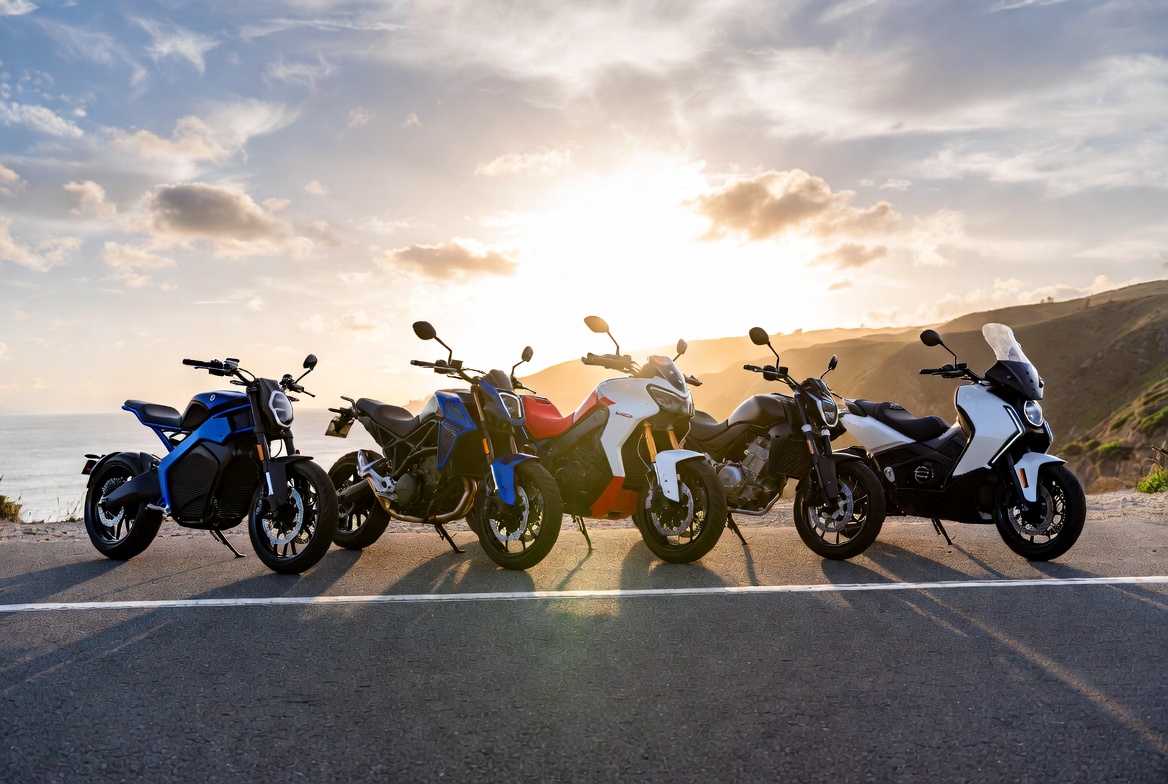
Electric motorcycles aren’t some distant future thing anymore. By 2026 they’ve become proper, usable bikes that actually deliver good performance, decent range, and a lot of fun — while being significantly cheaper to run and maintain than petrol ones. The instant punch of torque, smooth power, and that quiet ride make them surprisingly enjoyable on Portugal’s coast roads, mountain routes, and even in busy city traffic.
If you ride around Lisbon or Porto every day, want to explore the Douro Valley, or just need something fun for the weekends, this is probably the best time yet to consider going electric. There are now solid options from bigger brands as well as some newer players. Of course, “best” still depends on your budget, how far you usually go, and what kind of riding you actually do. Still, a few models stand out quite clearly this year.
Want to try motorcycling in Portugal without buying a bike right away? motorcycle rental here is a straightforward way to get out on the road, explore the country, and see if two wheels are for you.
What actually matters when choosing an best electric motorcycle in 2026?
Instead of just looking at spec sheets, it’s worth focusing on how these bikes behave in daily use:
Most riders need a realistic range of at least 120–200 km if they want to feel comfortable on longer day trips — not just the optimistic numbers from tests.
Instant torque feels great, but only if the chassis, suspension and brakes can actually handle it.
Charging needs to be convenient. A good home setup plus access to fast public chargers makes a massive difference in real life.
Weight and riding position matter more than people expect — lighter bikes are nicer in traffic, while more upright ergonomics help on longer rides.
Battery warranty and service support are important. A solid 5-year battery warranty and decent dealer network can save a lot of stress later.
Running costs are where electrics usually win quite clearly — electricity is cheap, and maintenance is minimal compared to petrol bikes.
Features like riding modes, strong regenerative braking and a good app can make everyday use much more pleasant.
Keeping these things in mind, here are some of the electric motorcycles that stand out in 2026.
1. LiveWire S2 Del Mar – Best Overall for Most Riders
The LiveWire S2 Del Mar consistently earns top honours in independent tests for good reason — it was named MCN’s Electric Bike of the Year. It strikes an outstanding balance of performance, handling, range, and everyday usability.
Key specs (2026 models):
- Power: ~83 hp with strong, linear torque delivery
- Real-world range: 100–160 km mixed (city riding often exceeds 170 km)
- Charging: ~1 hour 18 minutes for 20–80%
- Weight: ~198 kg
- Price: Starting around €18,000–20,000 depending on market and options
The S2 Del Mar feels premium yet approachable. Its chassis and suspension deliver confidence-inspiring handling, while the smooth power makes overtaking effortless and corner exits exhilarating. It is genuinely fun on twisty roads yet comfortable enough for longer days. Many reviewers call it the most “motorcycle-like” electric experience currently available — engaging without being intimidating.
Pros: Excellent real-world usability, premium build, fun factor, strong owner satisfaction.
Cons: Public fast-charging network still growing in some rural areas; premium pricing.
It is our top recommendation for riders who want one bike that does most things very well.
2. Zero DSR/X – Best Adventure & Mixed-Surface Electric
For riders who want to venture beyond tarmac — gravel tracks, fire roads, or light trails in Portugal’s interior — the Zero DSR/X is the clear leader.
Key specs:
- Power: ~100 hp
- Real-world range: 120–180+ km mixed
- Charging: 2–4 hours typical (fast-charge options available)
- Weight: Approx. 230–240 kg (adventure-ready)
- Price: From around €24,000+
The DSR/X combines Zero’s mature powertrain and app ecosystem with long-travel suspension, upright ergonomics, and rugged styling. It offers credible adventure capability while remaining perfectly usable on highways and in cities. Regenerative braking is strong and tunable, helping extend range on descents.
Pros: Versatile, torquey, excellent build quality and warranty support, strong community.
Cons: Heavier than pure street bikes; fast charging still model-dependent.
If your rides regularly include unpaved sections or you simply love the adventure aesthetic, this is the best electric motorcycle to choose.
3. Energica Experia – Best for Serious Touring
When maximum range and long-distance comfort matter most, the Italian-built Energica Experia remains the benchmark.
Key specs:
- Power: ~101 hp
- Real-world range: Often 150–250+ km depending on conditions and riding style (higher claims in ideal scenarios)
- Charging: Strong DC fast-charging support
- Weight: Heavier tourer class (~250 kg range)
- Price: Premium segment, typically €23,000+
The Experia features a large battery, comfortable ergonomics, and proper sport-touring capability. It proves electric motorcycles are no longer limited to short urban hops. Many owners use it for multi-day tours with strategic charging stops.
Pros: Class-leading range for electric motorcycles, refined ride, fast-charging readiness.
Cons: Higher price; heavier for pure urban use.
For riders planning longer journeys across Portugal or into Spain, the Experia (or similar high-range Energica models) is worth serious consideration.
4. Honda WN7 – Best Mainstream & Newcomer Choice
Honda’s first proper full-size electric motorcycle, the WN7, brings mainstream credibility, reliability expectations, and broad accessibility to the segment.
Key specs (2026 production model), according to Honda’s official data:
- Power: 50 kW peak (~67 hp) / 100 Nm torque (also available in lower 11–18 kW rated versions for A1/A2 licences)
- Range: Up to 140 km WMTC (real-world typically 100–130+ km)
- Charging: CCS2 fast charging — 20–80% in ~30 minutes; full charge ~2.5 hours with suitable wallbox
- Weight: 217.5 kg
- Price: Around €15,000 / £12,999 (market dependent)
The WN7 uses a frameless design with the battery as a stressed member, belt drive, and thoughtful ergonomics (800 mm seat height). It offers engaging performance comparable to a 600 cc petrol bike in many situations, with the added benefits of smoothness and low running costs. Honda’s dealer network and reputation for quality are significant advantages for new electric riders.
Pros: Trusted brand, fast charging, balanced performance, licence-friendly options, strong value.
Cons: Newer platform so long-term owner data still building.
This is an excellent choice for riders who want a “normal” motorcycle experience with electric benefits and widespread support.
5. BMW CE 04 – Premium Urban Electric Alternative
For a different flavour — more maxi-scooter than traditional motorcycle — BMW’s CE 04 offers premium urban mobility with motorcycle-level performance and build quality.
As we explored in detail in our recent article on BMW’s electric strategy, the CE 04 delivers strong acceleration, a high-quality 10.25-inch TFT display, excellent connectivity, and low ownership costs in a practical, stylish package. It is particularly well-suited to city riding and short-to-medium commutes.
Practical Tips for Electric Motorcycling in Portugal
Portugal’s climate and road network suit electric motorcycles beautifully. Mild winters, varied scenery, and a rapidly expanding public charging network (Mobi.E, PlugShare, and hotel/café chargers) make day trips and even multi-day tours very feasible.
Key considerations:
- Plan longer routes with apps — allow buffer for hills, headwinds, and spirited riding.
- Home or workplace charging is ideal; many newer apartments and houses support wallboxes.
- Regenerative braking is your friend on descents (common in northern and central Portugal).
- Maintenance is minimal — expect mainly tyre, brake pad (less wear thanks to regen), and occasional software updates.
- Running costs are dramatically lower: typically €2–5 per 100 km versus €10–15+ for a comparable petrol bike.
- Licence requirements vary by model power — several options now suit A1 or A2 riders.
The Road Ahead
Solid-state battery technology and further improvements in charging infrastructure are on the horizon, promising even greater range and faster refuelling. The arrival of Honda and continued development from Zero, LiveWire, Energica, and BMW signals that electric motorcycles are here to stay and will only get better.
Final Thoughts
There is no universal “best” electric motorcycle — the LiveWire S2 Del Mar currently offers the sweetest all-round package for most enthusiasts, while the Zero DSR/X, Energica Experia, Honda WN7, and BMW CE 04 each excel in their niches.
The important thing is to ride them. Test different models back-to-back if possible. Pay attention to how the weight feels, how the power delivery suits your style, and whether the range matches your typical journeys.
Electric motorcycling in 2026 is no longer a compromise — it is often the more enjoyable, more economical, and more future-proof choice. Whether you decide to buy or simply want to experience the thrill on your next trip to Portugal, the options have never been stronger.
Ready to ride? The future of motorcycling is electric, quiet, and incredibly fun.