
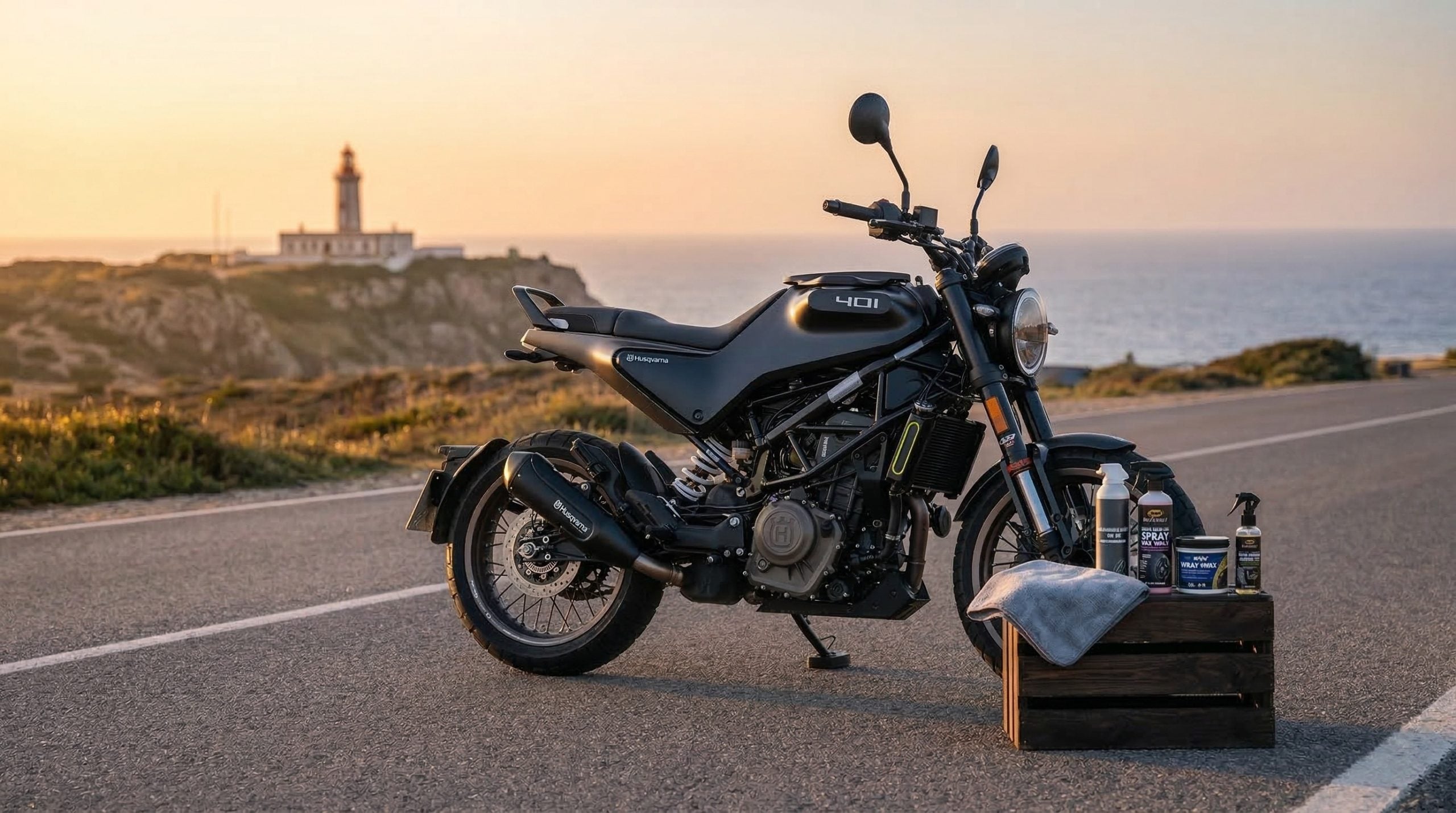
Exploring the scenic roads of Portugal on two wheels is an absolutely unforgettable experience that awakens all the senses. Whether you are the proud owner of a dream machine or are using a premium motorcycle rental service to enjoy a sunny weekend, post-ride care is essential for the vehicle’s long-term health. Imagine a perfect, tranquil route that starts in the lush, green Parque de Monsanto and winds its way through the beautiful, shaded roads towards Lagoa Azul. When you return to base, your bike will carry the marks of that adventure: fine forest dust, smashed bugs, asphalt residue, and general road grime.
High-performance models, like the agile Yamaha Tracer 9 GT or the adventurous Honda X-ADV 750 DCT, require meticulous washing after this type of journey. However, the true science of detailing does not lie merely in removing dirt with water and shampoo; the central question is: what should be applied to the motorcycle immediately after washing to seal and protect the surfaces? Letting the bike air dry and parking it in the garage is a serious mistake that accelerates metal oxidation and plastic discoloration over time.
Before applying any protective products, it is essential to wash your motorcycle properly. Using the best product to wash a motorcycle ensures that dirt, grease, and road grime are removed without damaging the paint, metal parts, or plastics.
A pH-neutral motorcycle shampoo prepares the surface perfectly for the protection steps we will cover in this article.
1. Drying: The non-negotiable first step
Before any product touches your motorcycle, all moisture must be completely eliminated. Tap water contains minerals that, as they dry, leave stubborn hard water spots. Use a compressed air blower to force out the water pooled in the radiator fins, engine block crevices, and the complex electronic switches on the handlebars. Next, use heavy-weight microfiber towels, gently pressing them against the fairings to absorb water without rubbing. A perfectly dry surface is the mandatory canvas for protective products to bond effectively and last longer.
2. Treating the fairings: Gloss vs. Matte Finishes
The product applied to the tank and fairings depends entirely on the type of paint. If you ride a machine with a glossy finish, such as the elegant Honda Transalp 750, applying a high-quality carnauba wax or a synthetic spray sealant is the ideal step. These products create a strong hydrophobic barrier that repels water and dirt, ensuring that bugs won’t permanently bond to the clear coat on your next ride along the coast.
On the other hand, today’s market is full of motorcycles featuring flat paint and matte textures — urban models full of attitude like the Husqvarna Svartpilen 401 or the aggressive Yamaha MT-125. In these cases, using traditional waxes is strictly forbidden, as the polishing action will destroy the flat effect, creating irreversible glossy patches. For these paints, use exclusively “quick detailers” formulated specifically for matte finishes. These sprays clean remaining impurities, protect against harsh UV rays, and keep the original texture completely intact and uniform.
3. Deep conditioning of plastics and rubbers
Motorcycles built for true exploration, like the formidable KTM 890 Adventure R Rally, boast large panels of textured black plastics designed to withstand gravel impacts and tough trails. With constant exposure to the strong Portuguese sun, these plastics lose their natural oils, becoming whitish and aged. After washing, apply a premium polymer or silicone-based conditioner. Place a small amount on a microfiber applicator, spread it evenly over the surface, and after a few minutes, buff off the excess with a clean cloth to prevent dust attraction. This simple process restores a deep black tone and flexibility to the materials.
4. The invisible shield against metal corrosion
The coastal air in iconic areas like Cascais, Cabo da Roca, or the Marginal road leading to Sintra is highly corrosive due to the ocean spray. Exposed bolts, bare engine components, wheel spokes, and unpainted sections of the swingarm suffer terribly from oxidation. It is imperative to use a corrosion inhibitor, such as the famous ACF-50 or similar ceramic-based products. The correct technique is to spray the product directly onto a microfiber cloth and then meticulously wipe the metal surfaces. Never spray towards the bike, as a single drop on the brake discs will entirely compromise your braking ability. This ultra-thin film actively repels moisture for months.
5. Surgical lubrication of the drive chain
If you used a strong degreaser to clean the chain (something absolutely vital on high-torque bikes with brutal power delivery like the KTM SMC 690R), the drivetrain has been left completely unprotected. With the bike slightly warm from a quick ride around the block, apply a chain lubricant specifically designed for O-rings. Spray the product on the inside of the chain, on the lower run of the swingarm, while turning the rear wheel smoothly by hand. Apply only what is necessary and let it sit for at least 30 minutes. This allows the solvents to evaporate and the film to adhere perfectly, preventing the lube from flinging onto the rim or tire during the first few miles of your next journey.
6. Safety limits: Where to never apply products
As vital as knowing what to apply is knowing what to avoid at all costs. Never use conditioners, silicones, or “tire shine” products on the tread of motorcycle tires. Motorcycling requires maximum lateral grip in corners; a slippery tire is the fastest and most dangerous route to a crash. Likewise, avoid any slick products on the seat. A silicone-conditioned seat will cause you to slide forward during emergency braking, making you lose control of the handlebars and your proper riding posture.
Keeping the bike in an immaculate state exponentially elevates riding confidence and protects your long-term investment. It is this attention to detail that differentiates a mundane experience from an extraordinary journey, whether taking care of your own garage or when enjoying a top-tier motorcycle rental. Don’t wait any longer to experience the sheer freedom of exploring Portugal without maintenance worries: rent a scooter or motorcycle of excellence today at RENT.MOTO.ptand start your next great adventure!