Serra da Arrábida by Motorbike: N379-1, Portinho, Viewpoints
Guide to the Serra da Arrábida by motorbike: the N379-1, Portinho, stops, which bike to choose and what to watch for. October 2026 prices.
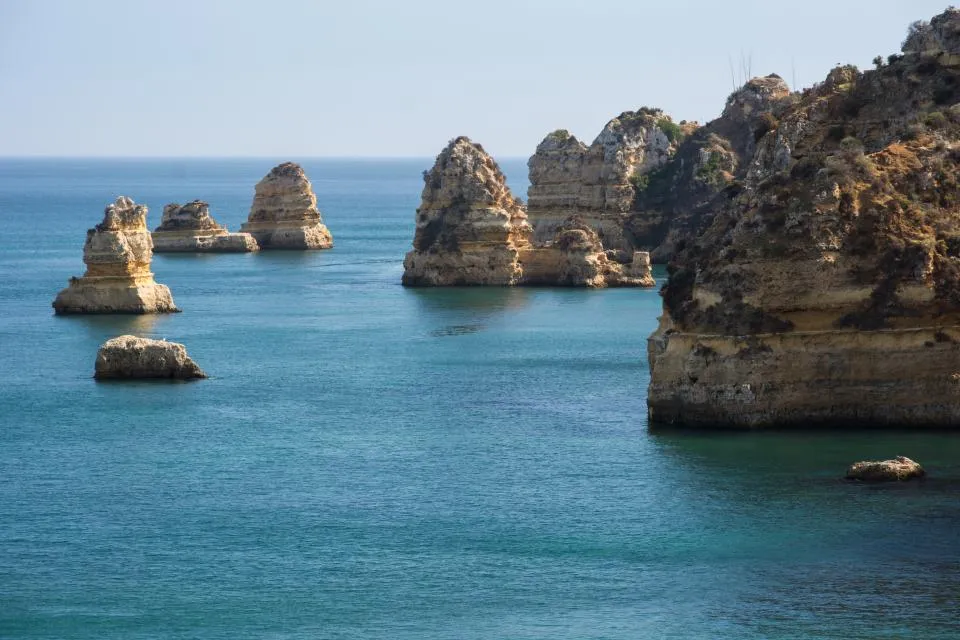
Some roads take you somewhere, and some roads are the whole point. The one that climbs and dips through the Serra da Arrábida belongs to the second group. On one side, white limestone and Mediterranean scrub smelling of rosemary and rockrose; on the other, an Atlantic in a colour that looks borrowed from an Algarve paint chart. And all of it a few kilometres from the Setúbal Peninsula, which means within reach of a day trip from Lisbon. This guide explains how to ride the Serra da Arrábida by motorbike without wasting time in queues, where to stop, what to watch for in the bends and which bike to pick.
In short:
- The Arrábida Natural Park was created in 1976 by Decree-Law no. 622/76 and its highest point is the Pico do Formosinho, at 501 metres.
- The benchmark road for riders is the N379-1, between Setúbal and Sesimbra, with tunnels, viewpoints and access to the Portinho da Arrábida.
- At October 2026 prices, the Honda NC750X costs €100 per day and the Honda Transalp 750 costs €110 per day, with 400 km per day included.
- Rentals have a 2-day minimum, a €1,000 deposit on these two models, an A licence and a minimum age of 21.
- The best times are morning and late afternoon: the light is better, there are fewer cars and the road is calmer.
What the Serra da Arrábida is and why it works so well on a motorbike
Arrábida is not a huge range. The Pico do Formosinho stands at 501 metres, which keeps it far from any altitude ranking. What makes it special is the combination: a limestone ridge that drops almost sheer into the sea, in a narrow strip where, within a few kilometres, you go from pine forest to holm oak woodland, from scrub to cliff. The park covers the municipalities of Palmela, Setúbal and Sesimbra and, according to the information gathered in the encyclopedia, holds about 1,400 plant species, equal to 40% of Portugal's flora.
For a rider, what counts is the geometry. The range forces the road to follow the hillside, so the layout is made of medium bends, clearly visible and free of nasty surprises, with the sea always as a backdrop. It is not a road for a sporty pace: tourist traffic and the views call for a relaxed speed. But that is exactly why a general-purpose bike suits it. You do not need horsepower or track experience. You need time.
The park was created by Decree-Law no. 622/76 of 28 July, and it is managed by the Instituto da Conservação da Natureza e das Florestas (Institute for Nature Conservation and Forests). The ICNF page on the Arrábida Natural Park is the official starting point for visiting and conservation rules. It is worth checking before you set off, especially if you plan to stop along the coast.
The N379-1: the road across the range
When people talk about the Serra da Arrábida by motorbike, they mean the Estrada Nacional 379-1. It is the road that links Setúbal to the Sesimbra area along the southern slope of the range, with the sea right beside the road for much of the way. It is also the same road where car brands like to film adverts: Wikipedia lists several, including scenes shot in the Figueirinha tunnels and near Galapos beach. If a road serves as a backdrop for advertising campaigns, the least you can expect is that it is worth the trip.
Before you set off
Decide on your direction before leaving and do not reverse it halfway. With tourist traffic and short verges, turning back is tiring and not very safe. Set your navigation to use the N379-1 as a waypoint so your phone does not divert you onto faster roads, and carry a full tank: do not count on a petrol station at every corner inside the park.
The Figueirinha tunnels and handling the light
The Figueirinha tunnels are the best-known part of the route. Going from bright light into a dark tunnel forces your eyes to readjust, and anyone with a tinted visor feels the effect sooner. If you have a sun peak, slow down at the entrance. If you wear sunglasses under your helmet, put them in a bag before you get there: taking them off while moving is not a good idea. Inside the tunnel, keep your usual distance and do not overtake on impulse.
On coastal roads, sand and leaves on the surface are a common hazard. Nothing to be alarmed about, but it is a reason to always look where you are going, not at the scenery.
Portinho da Arrábida and the Convent
The Portinho da Arrábida is almost everyone's stop: a sheltered bay at the foot of the range, beside the sea. On good-weather days, the car park tends to fill up. The earlier you arrive, the easier it is to park your bike somewhere orderly, without blocking exits or walkways. Setúbal City Council publishes tourist information about the municipality on its tourism page, and that is where you should check for access restrictions on busier days.
Above the Portinho stands the Convento de Nossa Senhora da Arrábida (Convent of Our Lady of Arrábida), one of the historic stops of the range. Wikipedia includes it in the list of sites of interest in the park, alongside the Castelo de São Filipe, the Castelo de Palmela and the Santuário de Nossa Senhora do Cabo Espichel. We will not promise visiting hours: they change with the season and it is best to confirm before you go. What you can do without hesitation is stop at the nearest viewpoint and look down at the bay.
Near the Portinho you will also find Creiro beach, where there was once a Roman fish-salting complex, occupied around 25 BC and devoted to making garum, the fish sauce that was exported in amphorae to the rest of the empire. It is a historical curiosity for anyone who likes to know what lies beneath their feet.
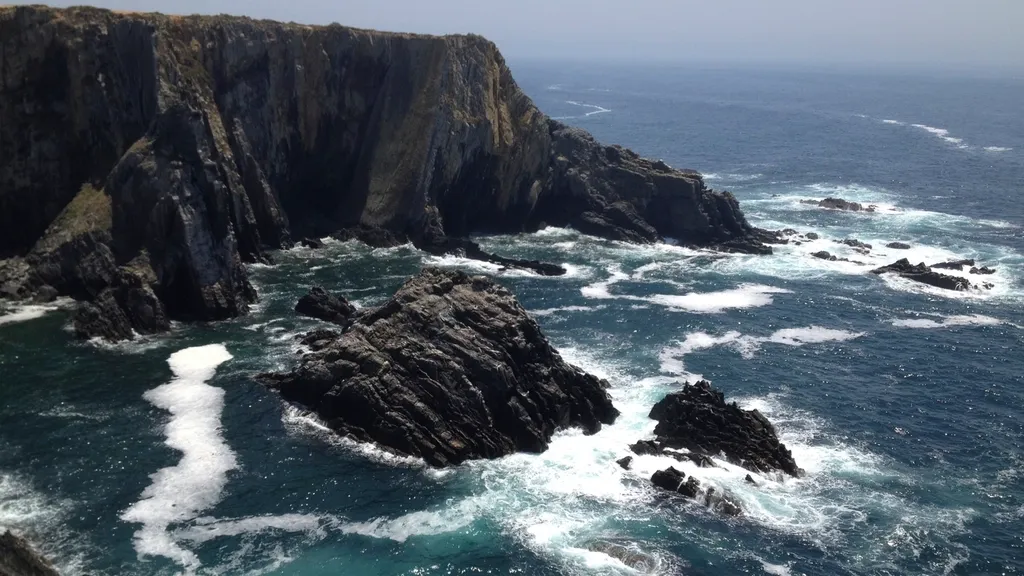
Stops worth the detour
Galapinhos and Galapos
In 2017, Galapinhos beach was voted the most beautiful in Europe in an international vote that gathered more than 130 countries and 280 bathing areas, according to Wikipedia. Even if you do not plan to swim, it is a good reason to know that the range's coast has quality beaches and that the contrast between the water and the green of the hillside is what draws visitors from abroad. If you decide to walk down to a beach, remember that riding gear is not made for walking: look after your helmet and gloves and stick to the marked paths.
Azeitão: cheese and wine
North of the range lies the town of Azeitão, with two famous products: Queijo de Azeitão, made from raw sheep's milk with thistle rennet and salt and protected as a designation of origin by the European Union, and Moscatel de Setúbal, the fortified wine linked to the Terras do Sado demarcated region. Stop to buy cheese, but think twice before tasting wine: on a motorbike, the rule is simple and non-negotiable.
Cabo Espichel as an extension
If you have time, you can extend the trip to the Santuário de Nossa Senhora do Cabo Espichel, which sits at the western tip of the peninsula and is also on the park's list of sites of interest. It is not essential, and on a short day it is best left for another occasion, but it makes sense on a two-day trip rather than cramming everything into a single afternoon.
Which bike to choose for the Serra da Arrábida
The short answer: the one that makes you feel at ease. On this road you gain nothing from 180 hp and lose a lot with a bike too heavy to manoeuvre in sloping car parks. The two machines that make the most sense in the fleet are the Honda NC750X, at €100 per day, and the Honda Transalp 750, at €110 per day (October 2026 prices). The NC750X has 43 kW, an 800 mm seat and a range of about 400 km, which makes it very easy to ride. The Transalp has 67.5 kW, an 850 mm seat and a 5-inch TFT display, and it is the choice for anyone who wants more engine without leaving the mid-size adventure world.
To see the full spec sheet, prices and requirements of a motorbike for the Serra da Arrábida, the Honda Transalp 750 is a good starting point: with 92 hp and 208 kg, it handles tarmac, some rougher surfaces and luggage with no effort. To compare all the rental options, the catalogue at rent a motorbike for Arrábida shows the fleet by category.
Both models require an A licence and a minimum age of 21. On both, the deposit is €1,000, blocked on a credit or debit card in the rider's name and released within 5 working days. The rental has a 2-day minimum, includes 400 km per day and each additional kilometre costs €0.49. For a trip to Arrábida, 400 km per day is more than enough: the whole route, with stops, comes in well below that figure. Bookings need a 30% deposit and pick-up is at the shop in Sobreda, every day between 09:00 and 19:00.
How to plan the day
The most common mistake is leaving late. Anyone who sets off from Lisbon mid-morning reaches the range in the middle of the Sunday-drive rush, with the road full of rental cars and tourist coaches, and spends half the time behind someone who brakes on every bend. A good plan goes like this:
- Pick up the bike at 09:00 in Sobreda and head for the range in the morning, with the road still calm.
- Ride the N379-1 from one end to the other, with short stops at the viewpoints.
- Have lunch around Sesimbra or Azeitão, depending on the direction you chose.
- Head back with plenty of time to return the bike within the shop's opening hours, by 19:00.
Since the rental has a 2-day minimum, a good solution is to pair Arrábida with a second outing, for example to the west coast or to Setúbal. For the city of Setúbal and its urban side, what to see in Setúbal makes a good complement. Here the subject is the mountain road.
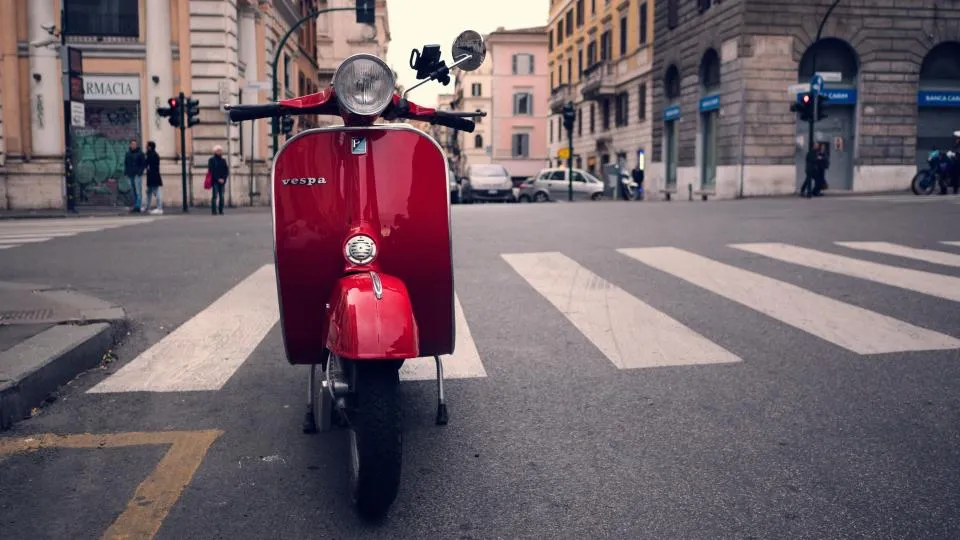
Riding safely in the range
Arrábida looks easy and that is deceptive. The road is clean, but there are four things worth keeping in mind.
First, traffic. On good-weather days, the road has tourists driving slowly in search of a place to stop, and it is common to see cars slow down suddenly. Keep your distance, look two bends ahead and do not count on brake lights.
Second, the surface. Sand, leaves and pine needles are real hazards on mountain roads. Enter bends at a speed that lets you brake in a straight line, not at the speed the bike can lean through.
Third, gear. Even for a short ride, wear a helmet, gloves, boots and a jacket with protection. The ANSR campaign 2 Rodas, agarre-se à vida (Two Wheels, hold on to life) explains why gear makes a difference. In the hot months, choose ventilated pieces, not T-shirts.
Fourth, parking. Do not leave the bike on sloping verges, on loose ground or in sensitive areas of the park. A drop while stationary, with the bike's weight going the wrong way, is the silliest way to spoil a good trip.
A note on the coast: the park has its own conservation rules and the local authorities may limit access in periods of high demand. Up-to-date information is on the ICNF and Setúbal City Council websites, and it is better to check before you go than to find out at the gate.
One last practical detail: Queijo de Azeitão, made from raw milk, is a fresh product and does not like heat. If you buy it in the morning and only return at the end of the day, ask for it to be well wrapped and carry it in the bike's luggage, away from the engine and the sun.
Frequently asked questions
Do I need an A licence to ride to the Serra da Arrábida?
It depends on the bike you rent. For the two bikes mentioned in this guide, the Honda NC750X and the Honda Transalp 750, each model's page states a category A licence and a minimum age of 21. For scooters and smaller bikes the requirements are different and are listed on each model's page.
How many kilometres can I ride per day?
Each rental day includes 400 km. A route around Arrábida, with stops and the return to Sobreda, comes in well below that limit. Each additional kilometre costs €0.49, under clause 5.1 of the terms and conditions.
What is the best time of year to go?
Spring and autumn tend to bring fewer people and temperatures that are easier for anyone riding in a helmet and jacket. In summer, demand at the range's beaches is higher and the road tends to fill up. If you can only go in summer, set off early.
How much is the deposit and when is it returned?
On the Honda NC750X and the Honda Transalp 750 the deposit is €1,000, blocked on a credit or debit card in the rider's name, and it is released within 5 working days.
Where do I pick up the bike and at what time?
The bike is picked up at the shop in Sobreda, at Estrada Nacional N10-1 no. 189, every day between 09:00 and 19:00. Home or airport pick-up is a paid service, available separately.
Ready to ride in Lisbon?
Book your motorcycle or scooter in a few minutes, with delivery across Lisbon.
View the fleetSources
- 1Decree-Law no. 622/76 of 28 Julyhttps://data.dre.pt/eli/dec-lei/622/1976/07/28/p/dre/pt/html
- 2ICNF page on the Arrábida Natural Parkhttps://www.icnf.pt/conservacao/areasprotegidas/parquenaturaldaarrabida
- 3tourism pagehttps://www.mun-setubal.pt/turismo/
- 42 Rodas, agarre-se à vidahttps://ansr.pt/seguranca-rodoviaria/campanhas/campanha-2-rodas-agarre-se-a-vida
Motorcycle and scooter rental in Lisbon, Portugal.
All articles by the teamYou may also like
Evora from Lisbon by Motorcycle: One-Day Guide
Evora from Lisbon by motorcycle in one day: route, weather, which bike to rent, what to see and how to avoid surprises with the return time.
Read more →
Ericeira from Lisbon by Motorcycle: One-Day Route and Prices
Ericeira from Lisbon by motorcycle: two routes, surf beaches, Mafra, which bike to rent and what it costs. One-day guide with October 2026 prices.
Read more →
Lisbon to Sintra by motorbike: routes, parking and hours
Lisbon to Sintra by motorbike: three routes, where to park, what the parks allow, October 2026 hours and tickets, and which bike to rent.
Read more →